 Tasodrums

Drum books are still one of the best ways to improve. There are endless videos out there, but a good book gives you a clear order and exercises for years to come. Many of these books have been on drummers' shelves for decades, and teachers around the world still use them.
Here are five of drummers' favorite books. For each one I explain the idea of the book, who it suits and where to buy it.
- Rokkaavat rummut – rock basics (in Finnish)
- Stick Control – stick technique
- Syncopation – reading rhythms
- The New Breed – coordination and time
- Linear Drumming – linear grooves and fills
Tip: The books are listed roughly from easiest to hardest. For a beginner, Stick Control is a great place to start.
1. Rokkaavat rummut (Leevi Leppänen)
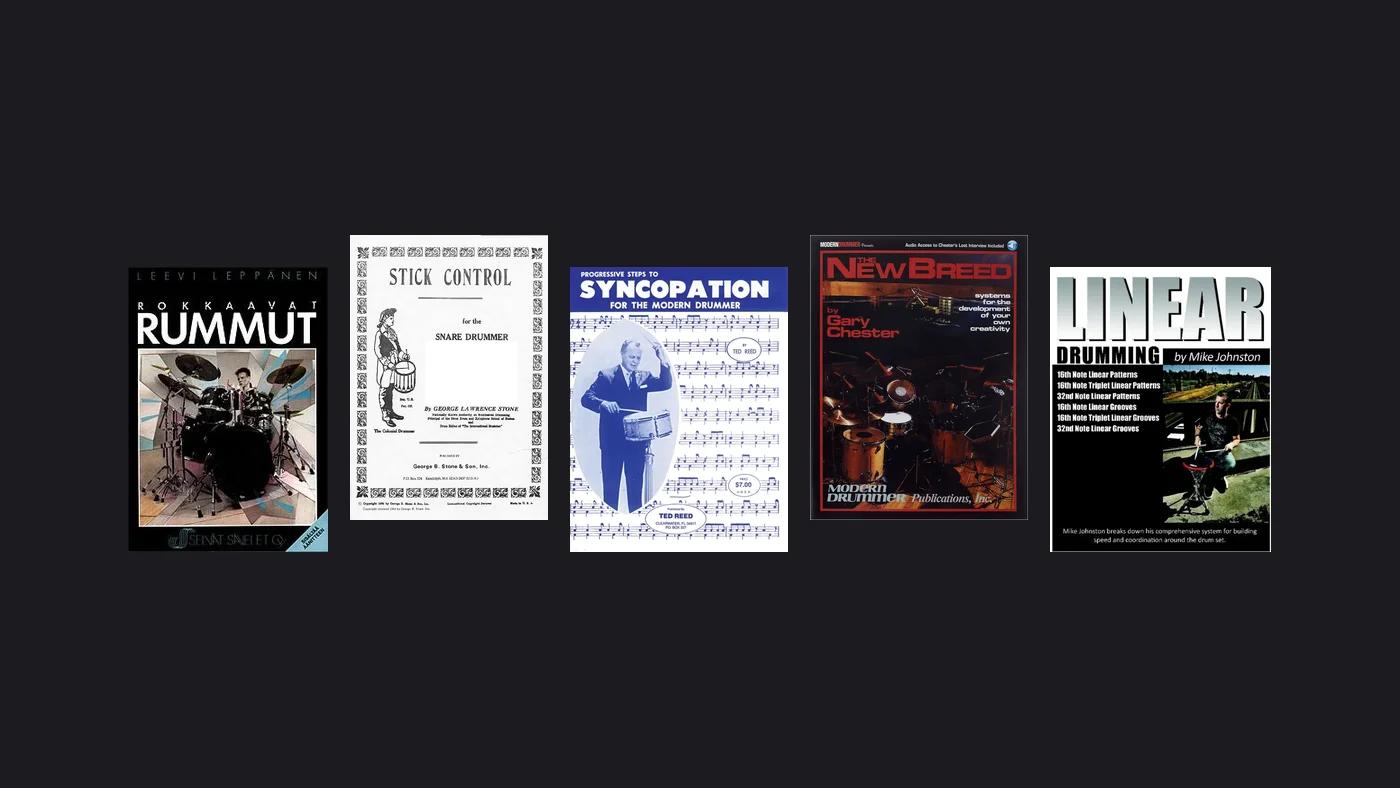
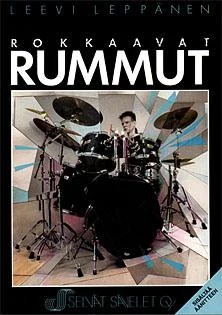
Rokkaavat rummut ("Rocking Drums") is a classic of Finnish drum literature that has taught the basics of rock drumming for more than 30 years. The book is in Finnish, but the notation and audio speak for themselves.
The idea of the book is to take you from basic rock grooves to complete songs. The exercises go from eighth-note rock to shuffle and 12/8 rock, with fills along the way. At the end, everything comes together in practice songs.
- Eighth-note rock, shuffle and 12/8 exercises
- Fills and how to connect them to grooves
- Practice songs played by a studio band, also as versions without drums
- Audio free to listen to on the publisher's website
Who it's for: beginners and early players who want to learn to play rock along with a band.
You can find the audio on the publisher's page: riffi.fi/rokkaavatrummut.
2. Stick Control (George Lawrence Stone)
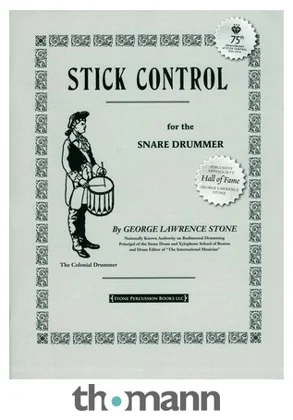
Stick Control came out back in 1935, and it's often called the drummer's bible. The idea is simple: page after page of sticking exercises that alternate between the right and left hand (R and L). The notation is easy, but the challenge is to play every pattern evenly and relaxed.
The first page has 72 short patterns in eighth notes. Later come triplets, accents, flams and rolls. Stone advises playing each exercise many times in a row and only moving on when it feels good.
- Builds stick technique, evenness and control of your weaker hand
- Works on a pad and snare, later on the kit too
- The patterns turn into endless new fills and grooves when you move them around the drums
Who it's for: everyone. A beginner can play the first page slowly with a metronome, and pros use the same book to warm up.
3. Syncopation (Ted Reed)
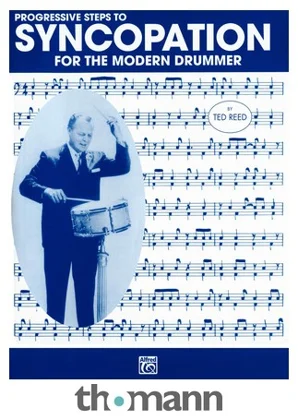
Ted Reed's Progressive Steps to Syncopation for the Modern Drummer (1958) is the classic book for reading rhythms. The idea is to teach you to read syncopation, meaning rhythms where the accent falls between the beats. The exercises go from quarter and eighth notes to sixteenths and triplets.
What makes the book special is that you can play the same pages in many different ways. Drummers play its rhythms on the bass drum under a groove, with the left hand over a jazz ride pattern, or as accents within sixteenth notes. That's why one book lasts for years.
- Improves your reading and sense of rhythm
- Great for independence practice on the kit
- A teacher favorite: new exercises keep coming from the same pages
Who it's for: drummers who know the notation basics and want to read rhythms fluently.
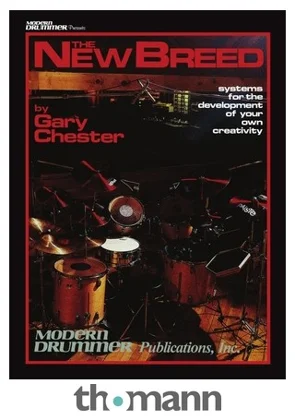
4. The New Breed (Gary Chester)
Gary Chester was a New York studio drummer who played on thousands of records. The New Breed (1985) collects his teaching method. The idea is to build independence and solid time: three limbs play a repeating pattern while the fourth reads a rhythm from the book.
Chester called the exercises systems. They switch which limb reads and which limbs play the pattern, so every limb gets a workout. He also tells you to sing or count out loud while playing, which develops your time and your ears.
- Coordination and independence of all four limbs
- Steady time and playing with a metronome
- Singing and counting while you play
Who it's for: players with some experience who want to take their coordination to the next level. It's demanding, so start slow.
5. Linear Drumming (Mike Johnston)
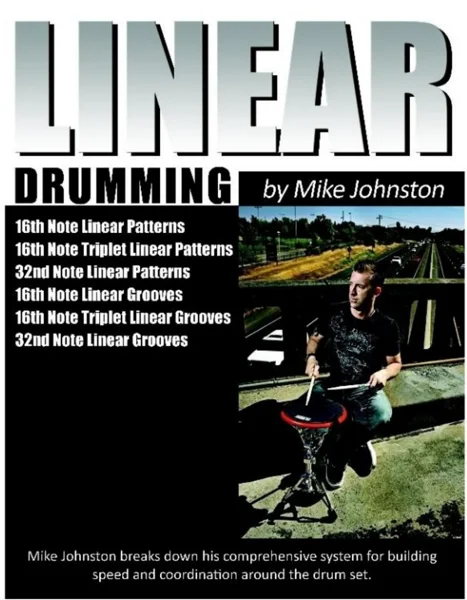
Mike Johnston is an American drum teacher and the founder of mikeslessons.com. In Linear Drumming he breaks down his own system for practicing linear patterns.
Linear playing means that no two drums or cymbals are ever hit at the same time: the hands and feet take turns. This creates fast, flowing fills and grooves. The book goes from patterns to grooves with three note values.
- Linear patterns and grooves in sixteenth notes
- The same in sixteenth-note triplets
- The same in thirty-second notes
- Clear stickings and notation for every pattern
Who it's for: more advanced drummers who want speed, flow and new ideas for fills and gospel- or fusion-style grooves.
How to use drum books
- Work on one book at a time and practice a little from it every session.
- Always play with a metronome and start slow.
- Write the tempo in the book when an exercise feels good. You'll see your progress.
- Move the patterns to the kit: turn them into grooves and fills.
Read Rudiments and Metronome and Time too, to get even more out of these books.