 Tasodrums

What kind of drum kit for a child?
When you pick a child's first drum kit, the most important question is size. A kit that's too big is hard to play, because the child can't properly reach the pedals or cymbals. A kit that's too small and cheap, on the other hand, quickly gets outgrown.
In this post we'll go through:
- Junior kit or full-size kit
- Acoustic or e-drum kit
- Drumsticks and hearing protection
1. Junior kit or full-size kit?
For small children there are special junior kits, where the drums and cymbals are smaller than usual and the stands are lower. A junior kit can be the best choice for a small child, but as soon as they're tall enough to reach the pedals, the same drum kits that adults use work for kids too.
Kids outgrow junior kits pretty quickly. Based on users' experiences, a junior kit suits kids under roughly 7–8 years old, and after that it's worth moving to a bigger kit. So first try with your child how it feels to sit at a regular kit, for example at a music store or at a drum lesson.
- The child can reach the pedals. With the throne at its lowest setting, both feet should comfortably reach the bass drum pedal and the hi-hat pedal.
- The drums and cymbals go low enough. The child shouldn't have to stretch for the toms or cymbals. Their hands and sticks should hit them naturally.
- The throne is adjustable. A good, adjustable drum throne grows with the child and moves on to the next kit too.
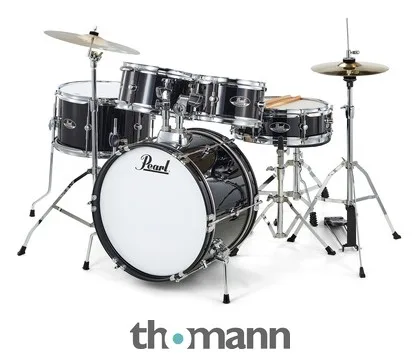
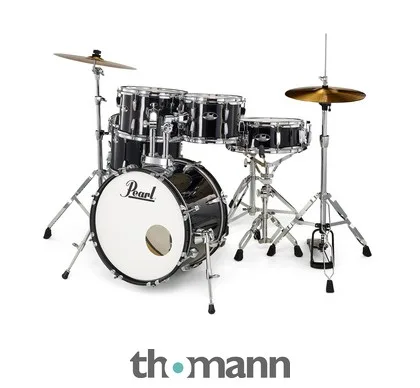
For a junior kit, the Pearl Roadshow Jr. is a good and popular choice. It has a 16-inch bass drum, small toms, a snare, plus a hi-hat and a crash. Once your child can reach a full-size kit, choose one with an 18- or 20-inch bass drum so you can set the toms a bit lower. That way the child can reach them better.
2. Acoustic or e-drum kit?
The choice mostly depends on where the drums will be played. Acoustic drums are so loud that they don't work in an apartment building. With electronic drums, your child can play at home with headphones, and you don't have to worry about the neighbors. Read more about playing drums in an apartment building in this post.
When buying an e-drum kit, avoid odd-looking, small and wobbly kits. Even a child outgrows them quickly, and they usually have minimal adjustment options. With e-drum kits, Roland is the brand to go for, since they offer the best value for money. These kits suit every player, whatever their age or size.
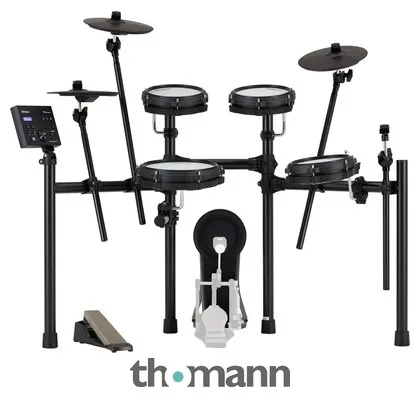
Check out more detailed tips on buying an electronic or acoustic kit in the Drum Kit for Beginners post. You'll find tips on buying used in the Buying Drum Gear post.
3. Drumsticks and hearing protection
Drumsticks for kids
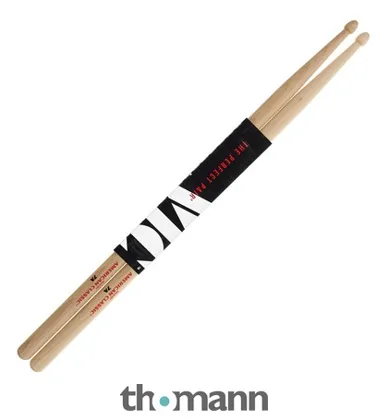
7A is a thinner stick for everyday use, and it works well for kids. 7A is a good choice up to about age 10. After that, any stick size works, for example the standard 5A or 5B. Sticks break now and then, so it's a good idea to always keep a couple of pairs within reach.
Remember hearing protection
An acoustic drum kit is really loud, and children's hearing is sensitive. Hearing protection always belongs at an acoustic kit, even for short playing sessions. With electronic drums you'll need headphones, and then the most important thing is to keep the volume moderate.
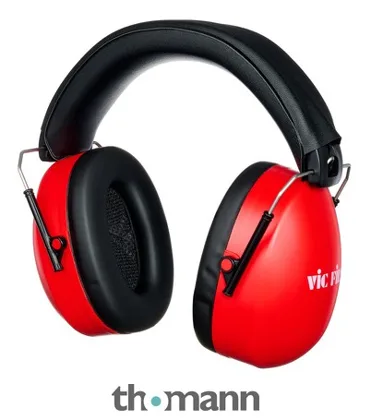
Tip: Besides the drum kit, you usually also need a bass drum pedal, a throne and headphones or hearing protection. Always check what comes with the kit.
Where to start?
Once you have the kit, the best way to get started is with a teacher. A teacher shows the right playing posture and stick technique right from the start, so bad habits don't get a chance to form.
Also read the Start Playing Drums post, where you'll find a list of all the gear you need at the beginning.