 Tasodrums

Where are you going to play? Should you buy electronic drums or an acoustic drum kit?
Buying a good drum kit can feel hard for a beginner. There are lots of options and brands, big price differences, and there doesn't seem to be one right answer. Don't worry, lots of drum kits are fine for a beginner, which is exactly why there isn't just one answer.
The first thing to think about is where you're going to keep and play the drums, in other words, are you buying electronic drums or acoustic drums?
Electronic and acoustic drums suit different purposes. If you're short on space and time, electronic drums fit nicely in the corner of the living room. If you can practice outside your home, acoustic drums are probably the better option.
Which kit you want to play is a matter of opinion, but when you're thinking about buying, it's good to know the main pros and cons of both options.
Note: A drum kit for a child
There are separate junior kits, which can be the best solution for a small child, but as soon as they're tall enough to reach the pedals, a child can use the same drum kits as adults.
When buying an e-drum kit, avoid odd-looking, small and wobbly kits. Even a child outgrows them fast, and they usually have minimal adjustment options.
When buying an acoustic kit, the bass drum should be 18 or 20 inches, so the toms can be set a bit lower. That way the child can reach them better.
Read more: Drum Kit for a Child
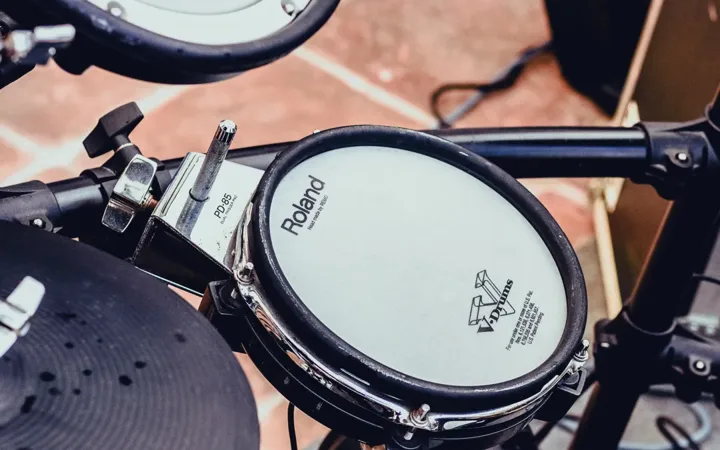
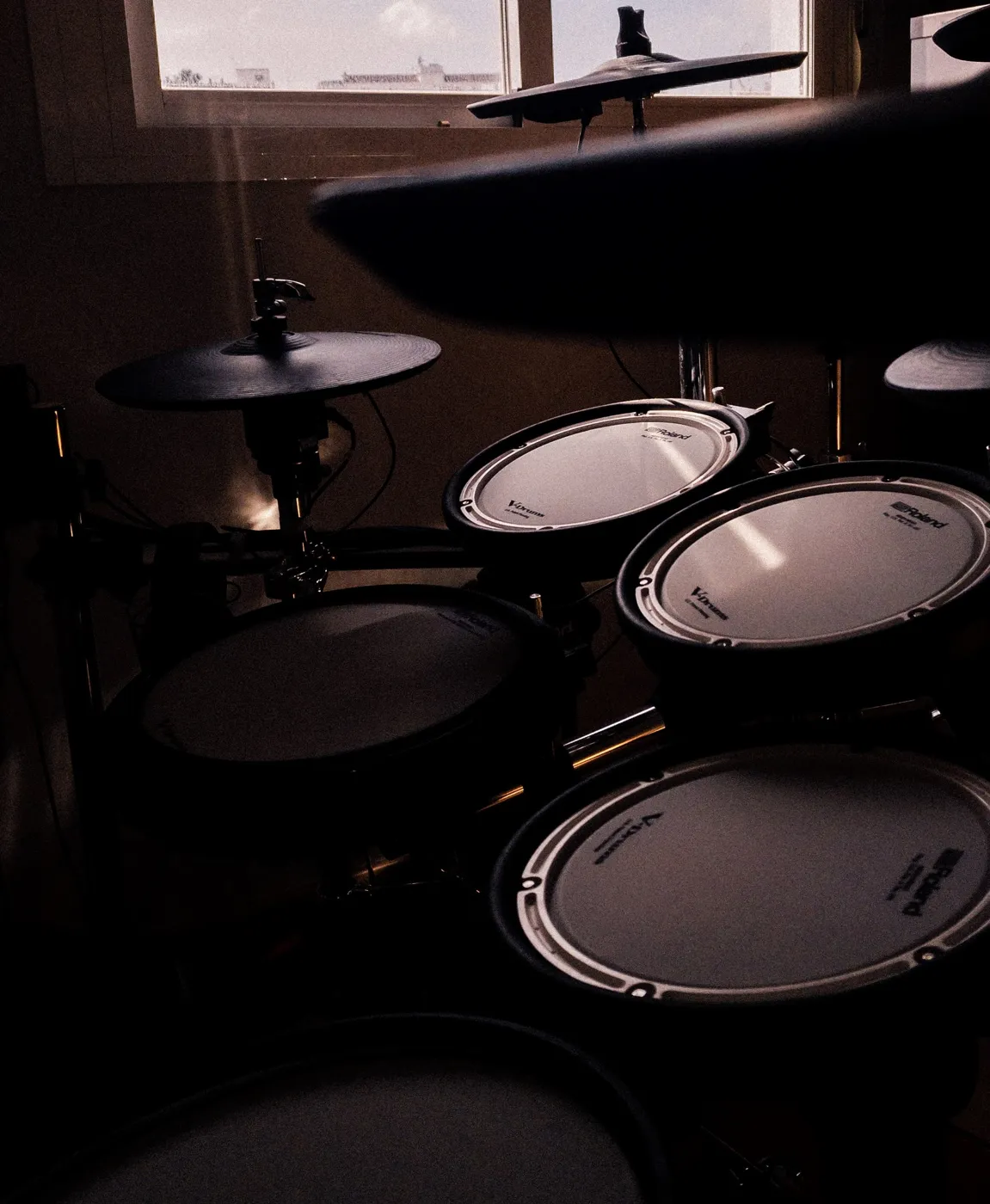
Option 1: Electronic drums
Pros and cons of an e-drum kit
+ Easy to get started. As soon as the e-drum kit is put together and set up, you can switch on the power and you're good to go.
+ Work in an apartment building, because they fit in a small space and the sound goes to your headphones. In practice this also means you don't have to travel back and forth between a rehearsal space and home. Remember that hitting the drums, and especially the bass drum, still makes noise. Keep your neighbors in mind.
+ You can connect them straight to a computer, which makes things like recording yourself playing easier.
+ Electronic drums don't need tuning. That helps if nobody in the household knows how to tune. Tuning drums takes a bit of learning and has to be done every now and then. With electronic drums you don't have this problem.
- A different feel. Hitting electronic drums doesn't feel the same as hitting the head of an acoustic kit. Often on electronic drums the stroke sounds the same in your headphones no matter how hard you hit or where you hit, especially on the cheapest kits. On an acoustic kit, how hard and where you hit can be heard directly in the sound, so when switching to acoustic, an e-drum player often has to relearn dynamics and kit balance.
- Price. The cheapest electronic drums are usually wobbly and narrow, the module doesn't necessarily pick up every stroke, the adjustment options are limited and so on. A kit that will keep up with the player for at least the first few years usually costs over 500 euros new.
- Electricity. They always need power to work, and electronic parts can of course break. Fixing them isn't the same as fixing or replacing a broken part on an acoustic drum kit.
- Adding new parts. On an acoustic drum kit you can move, remove and add new drums easily and exactly as you imagine. On an e-drum kit you can hit the limit sooner if the drum module doesn't have extra inputs.
Tips for buying an e-drum kit
- Be prepared to pay 700-800 euros for a new kit and about 400-600 euros for a used one.
- Make sure the kit has a real bass drum pedal and mesh heads. Cheaper kits only have separate trigger pedals for both feet. The right-foot bass drum trigger pedal especially doesn't feel anything like a real pedal. Mesh heads because they're the quietest.
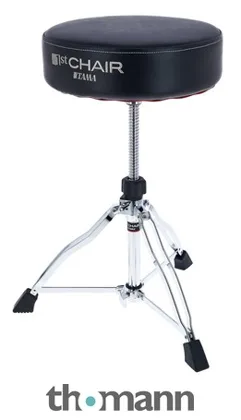
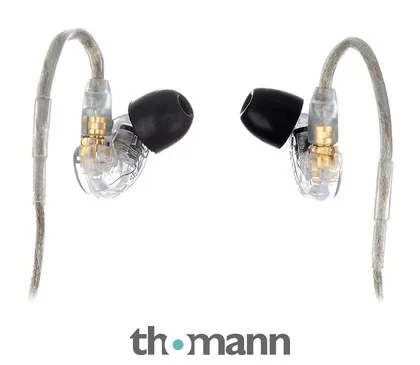
- Remember that the bass drum pedal, throne and headphones aren't always included automatically. When buying, check what comes with the kit.
Put a rug under your e-drum kit to dampen the bass drum noise and keep the drums in place!
You'll find more detailed tips on choosing an e-drum kit in E-Drum Kit: A Buyer's Guide.
Brand recommendation: Roland
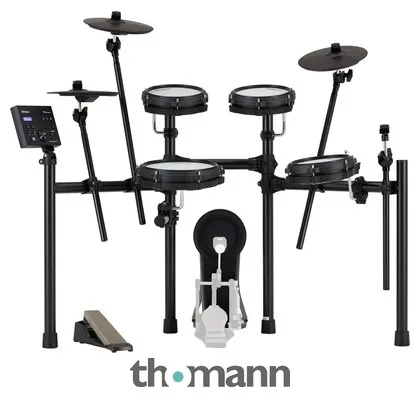
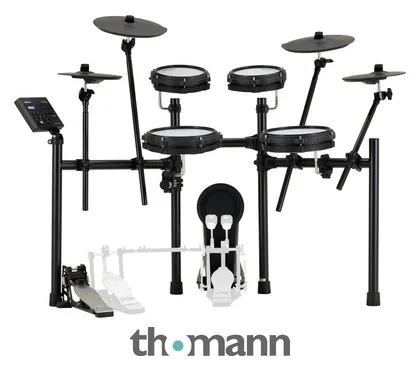
In Roland's models, a bigger number means a better model (for example, TD-17 is better than TD-07), and the price goes up accordingly.
These kits suit every player regardless of age and size. Buy just the kit, or a bundle that comes with headphones, a throne, a pedal and so on, if you don't already have them.
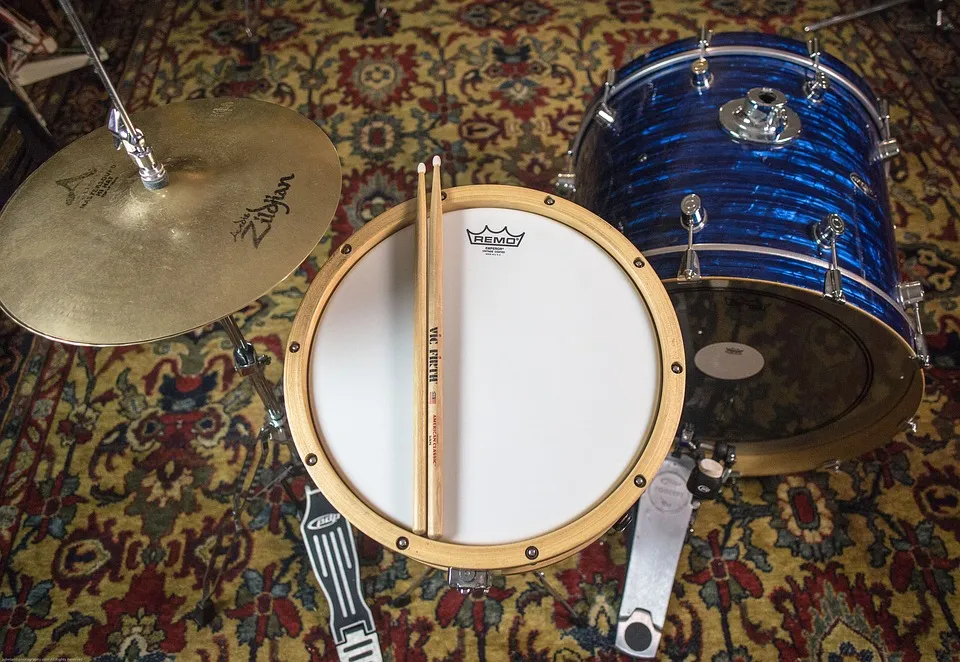
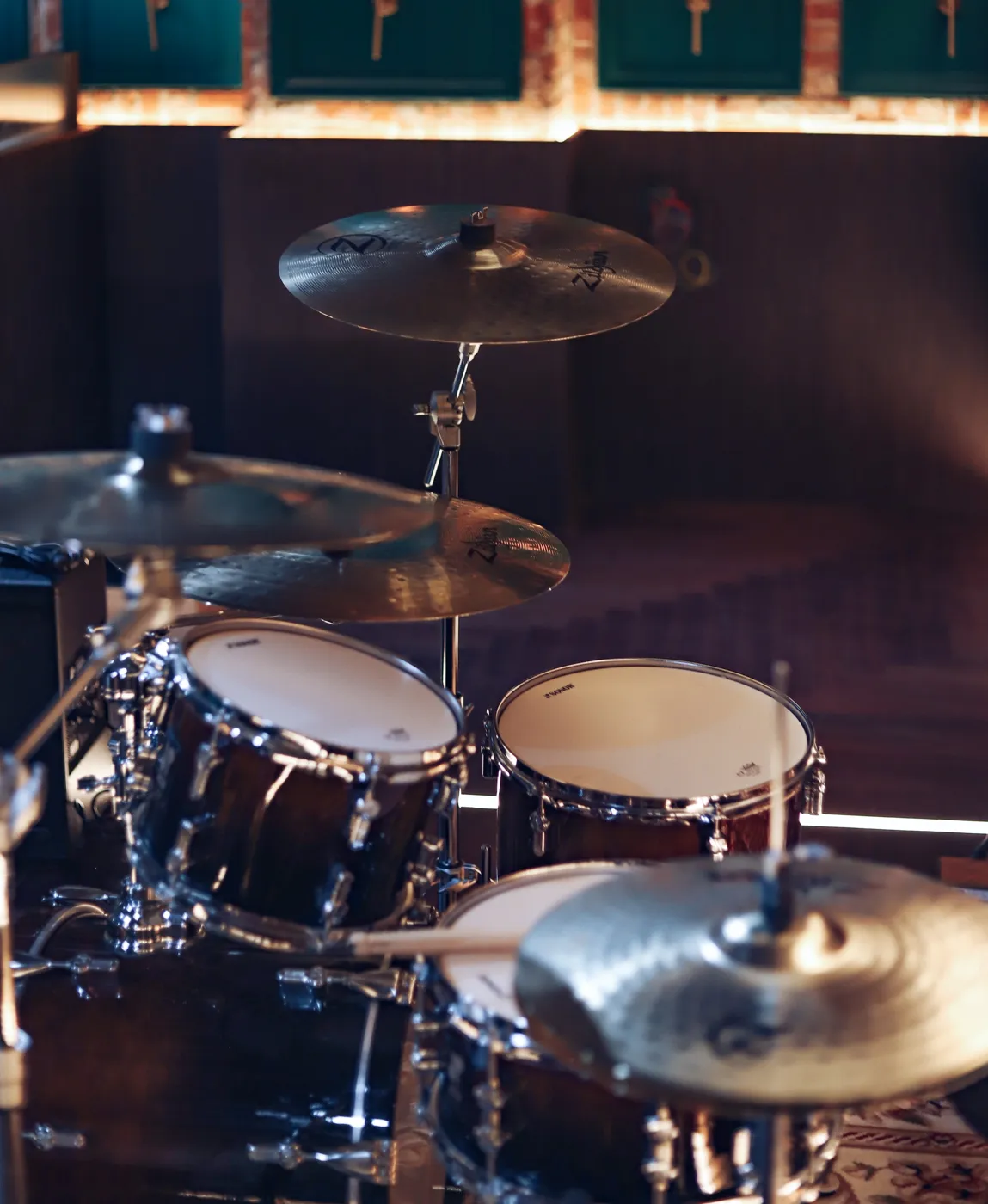
Option 2: Acoustic drum kit
Pros and cons of an acoustic drum kit
+ Value for money. You can already get a good-sounding kit for a reasonable amount of money. You can buy good heads for a cheap kit, and when it's tuned properly, even a cheaper kit can sound really good.
+ Feel. An acoustic drum kit feels completely different to play compared to an electronic one. You get to practice different volumes, the motions are bigger, and the feeling of an acoustic kit really is unbeatable.
+ Easy to customize. It's easy to buy more stands and cymbals, heads and other instruments for an acoustic drum kit to suit your own taste. In theory, anything goes.
+ Easy to buy and sell used. Lots of acoustic drums, stands and cymbals are sold used, and buying them used is mostly reliable and often even better value for money. The same of course works when you need to sell your old gear after upgrading.
- Need a house / rehearsal space. Acoustic drums are so loud that even with soundproofing they don't work in an apartment building.
- Need tuning. More important than the shell material is how the heads are tuned, because badly tuned or untuned drums don't flatter even the most expensive drum kit. Tuning can feel hard at first. You'll find instructions for tuning in this post.
- Cymbals are expensive. Like I said, even a cheap kit does great as long as you take care of the heads and the tuning. Cymbals are different, since they're the most expensive part of the kit. You can upgrade them as you go, but just one good cymbal can cost 150-250 euros.
Tips for buying an acoustic drum kit
- You can easily buy an acoustic drum kit new or used. The first thing to think about is the player's size and, through that, the drum sizes.
Drum sizes are given in inches, diameter x depth.
The standard sizes are
22" x 16" Bass drum
10" x 07" Tom tom
12" x 08" second tom tom
16" x 16" Floor tom
14" x 5.5" Snare - If you're buying a kit for a child, you can get one with an 18-inch bass drum, so the drums can be set a bit lower. Otherwise any size works. A smaller drum naturally gives a slightly higher sound and a bigger one a lower sound, though tuning and heads matter too.
- See this post for more tips on choosing drumheads
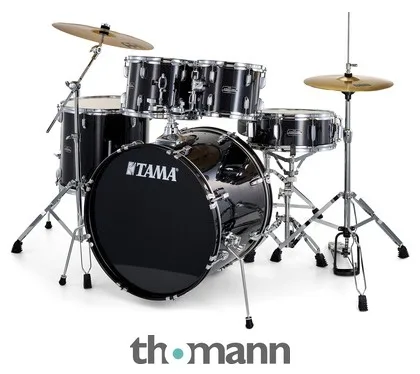
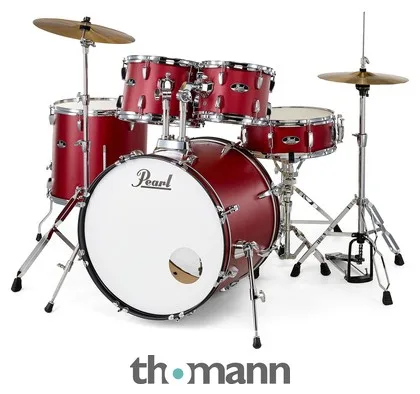
Think about this: A complete acoustic kit or a shell pack?
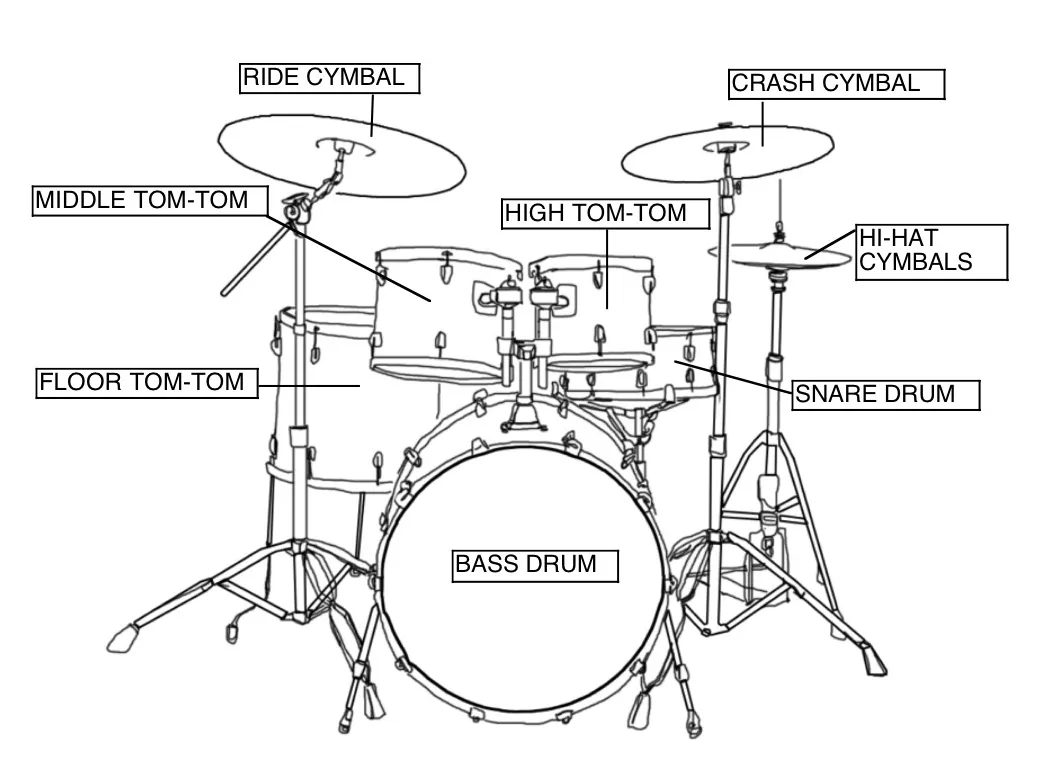
A complete acoustic drum kit (5-piece) includes the parts shown in the first picture. So all the drums, the cymbals and the stands for them.
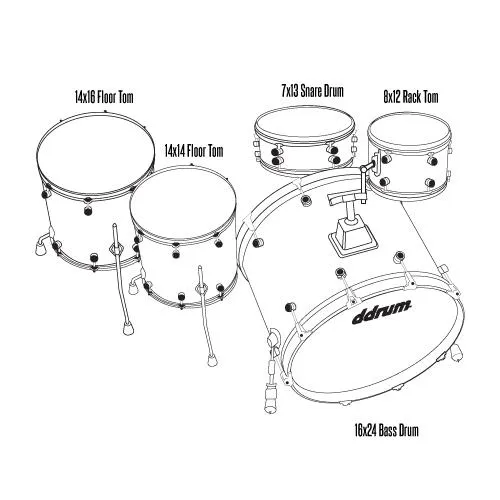
A shell pack (second picture) means the pedal, cymbals, cymbal stands and snare stand aren't included. Some shell packs include a snare and some don't, so check this when buying. If you already have the gear mentioned above, it's worth buying the new kit as a shell pack, so for the same money you get better quality on just the parts you need.
The snare drum is often bought separately, even though it's included in normal kits. The toms are the same brand and model, and they usually aren't mixed. The snare and cymbals, on the other hand, can be a different brand, and the cymbals can even be different brands from each other.
Good cymbal makers include Sabian, Paiste, Istanbul, Zildjian and Meinl. Cymbals are worth buying used, they last a long time.
Reminder: Remember to buy
Whichever kit you buy, the gear below usually isn't included. Read more about these in this post.
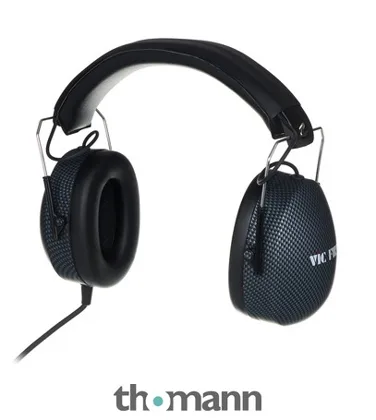
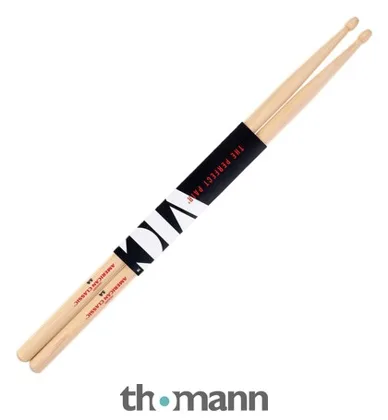
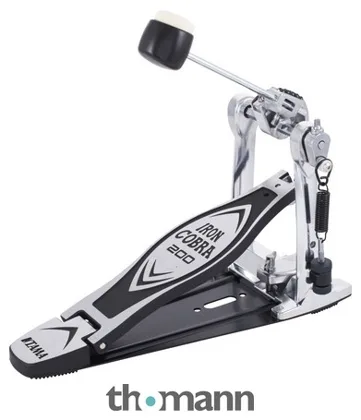
Where should you buy a drum kit?
Muusikoiden.net (a Finnish musicians' marketplace) or the Facebook group Rumpukirppis are good places to find quality used drum kits.
When buying new, it's a good idea to support your local music stores first, but if they don't have what you need, Europe's biggest music store, Germany's Thomann, is a safe choice. They have a wide selection, fast delivery and reliable service.
I hope this post helped you choose your drum kit a little better.