 Tasodrums

Why electronic drums?
For many people, an e-drum kit is the best way to start playing drums, especially in an apartment building. The drum sound goes to your headphones, and the neighbors mostly just hear the pads thumping. Adjustable sounds, a metronome and the chance to play along with songs also make practicing fun.
This guide goes through what parts an e-drum kit is made of, what to pay attention to when buying, and which kits suit beginners.
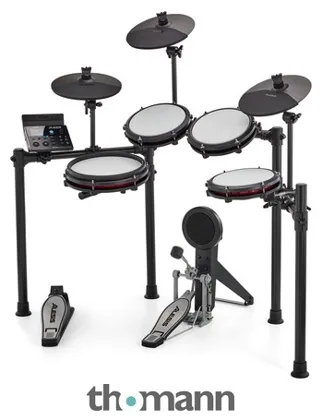
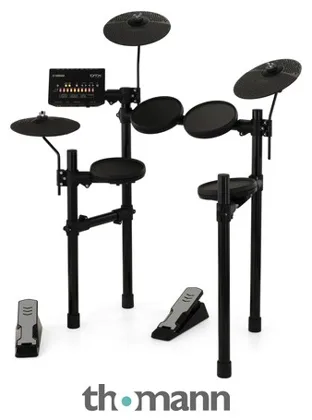
1. What parts does an e-drum kit have?
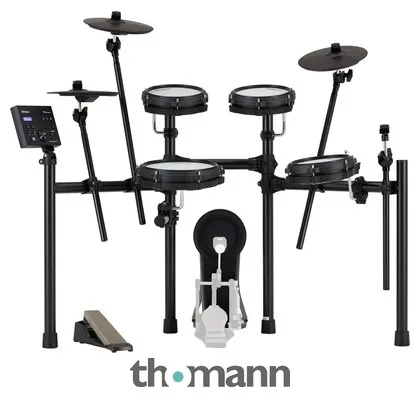
- Module – the "brain" of the kit, where the sounds come from
- Pads – the drums and cymbals you hit
- Hi-hat controller – the pedal that opens and closes the hi-hat
- Bass drum pad – what the bass drum pedal hits
- Stand, or rack – what everything is mounted on
You plug your headphones into the module, and it usually also has a metronome, built-in exercises and an input that lets you play music from your phone through the kit.
2. What should you pay attention to?
Mesh heads or rubber pads
This is maybe the single most important thing. There are two kinds of pads:
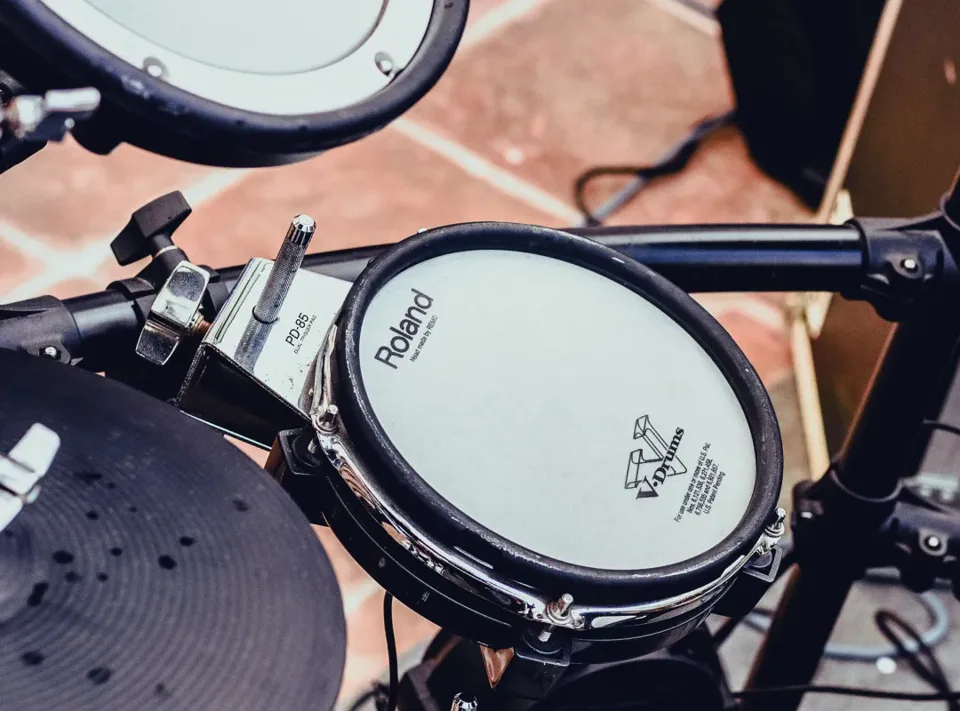
- Mesh head – a net-like head, quieter and feels closer to a real drum when you play
- Rubber pad – a hard surface, louder and bouncier than a real drum
I always recommend mesh heads if your budget allows it. They're quieter, and you can adjust the head tension to suit your own feel.
Snare rim hits
The snare pad should have two zones (dual-zone): the head and the rim. That way you can also play rimshots and cross-sticks, which you'll need pretty early on.
Bass drum pedal and hi-hat
On cheaper kits, the bass drum and hi-hat are just separate trigger pedals. Then the bass drum, played with the right foot especially, doesn't feel anything like a real pedal. Make sure the kit has a real bass drum pad that you can attach a regular bass drum pedal to. That way the pedal can later move straight over to an acoustic kit too.
What comes with the kit?
Remember that the bass drum pedal, throne and headphones aren't always included automatically. For example, Roland's TD-07DMK2 doesn't come with a bass drum pedal or a throne. Always check what comes with the kit when you buy.
3. Brands and models
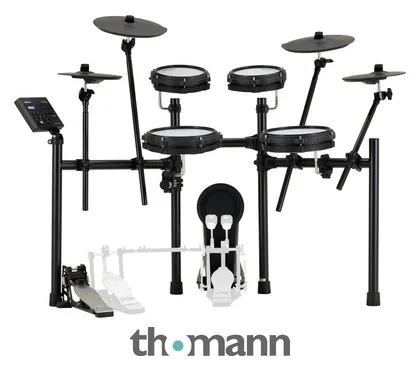
Electronic drums are made by Roland, Yamaha and Alesis, among others. For e-drum kits, go for Roland. They're the best value for money. In Roland's models, bigger numbers are usually better and more expensive models, for example TD-17 is better than TD-07.
Be prepared to pay 700-800 euros for a good beginner kit new and about 400-600 euros used. There are cheaper kits too, and they're a good option if your budget is tight.
4. Buying used
Electronic drums are often worth buying used, if you can find them in good condition. Test an electronic kit especially carefully before buying. Don't buy blind.
- All the pads work. Hit every pad at different volumes and check that the sound comes every time.
- The cables are intact. The sound shouldn't cut out when you move the cables.
- The mesh heads are intact. The heads shouldn't have holes or tears.
- The hi-hat opens and closes. Check that the hi-hat sound changes when you press the pedal.
Google the kit's model and take the original price and current condition into account, so you can judge whether the price is right. You'll find more tips on buying used in Buying Drum Gear.
5. Electronic drums and the neighbors
Playing electronic drums isn't completely silent. The biggest neighbor-bother is the bass drum, because the stomping of the pedal travels through the floor. At least put a rug under the kit, and in an apartment building, consider a separate isolation platform. Read more in Drum Kit in an Apartment Building.
Remember headphones: With electronic drums you need headphones so you can hear the drums. Noise-isolating headphones are the best option, because they also block out the clacking of the pads.
Recap
- Choose mesh heads if your budget allows
- The snare should have two zones
- Make sure you can attach a real pedal to the bass drum
- Check whether the pedal, throne and headphones are included
Compare electronic and acoustic kits in Drum Kit for Beginners.