 Tasodrums
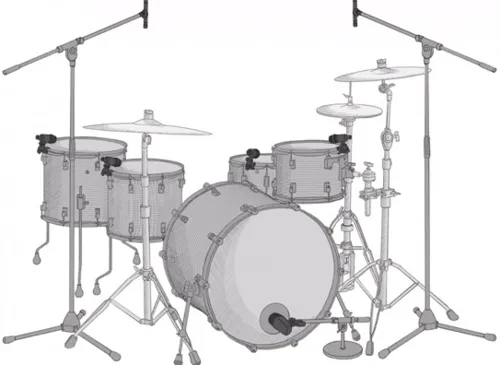
What do you need to record a drum kit?
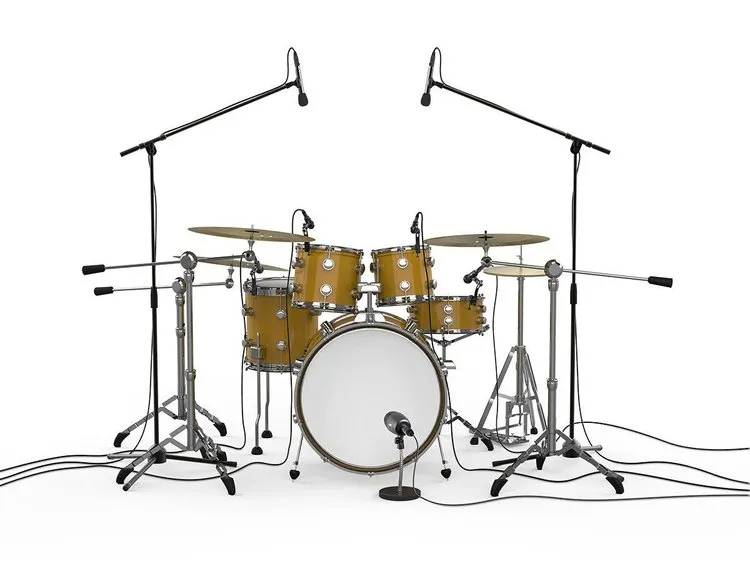
The answers are listed in this order:
- Overhead
- Snare
- Bass drum
- Rack toms
- Floor tom
- Hi-hat
- Room mics
- Mic sets
- Audio interface / Mixer
- Recording software (DAW - Digital Audio Workstation)
1. Microphones
+ mic stands / clips and XLR cables for every mic.
When it comes to recording drums, it's good to understand that a drum kit isn't just one instrument to record, like an electric guitar. Every part of the kit has its own channel and its own part in the whole.
Besides the mics, you need stands for every mic and XLR cables that carry the sound from the mic to the mixer.
How many mics you need depends on your needs and budget. With a bigger budget and in professional recording, every instrument is miked with at least one or two mics, plus room mics.
With a smaller budget, or when you're recording for yourself, you can do just fine with even two mics (one overhead and the bass drum).
Examples from a few mics to more
1. A single overhead mic above the drum kit plus a bass drum mic
2. Two overhead mics, plus one mic on the bass drum and one on the snare
3. Add mics on the toms
4. Room mics and extra mics, for example on the hi-hat, snare or bass drum
Side note: There are lots of miking techniques, and they need posts of their own to look at them more closely. This post is only about getting the gear you need so you can start recording in the first place.
2. An audio interface or mixer that fits what you need
Pictured: 3rd party audio interface
The job of an audio interface / mixer is to send the sound the mic picks up either straight to your headphones through the headphone jack, for live mixing or for listening to your playing in real time, or to your computer for post-processing. The difference is that you can't mix with an audio interface, only record, while with a mixer you can mix your playing live too.
There are lots of options and prices vary quite a bit. When you're thinking about buying one, make sure the audio interface / mixer has enough features and channels for what you need.
If you're only recording your own drums with four mics, you don't need as many channels or as many features as a whole band needs for live or studio work.
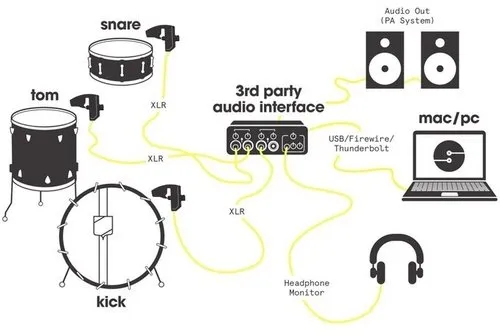
Image: https://www.kickstarter.com/projects/sunhouse/kickstarter-gold-sensory-percussion-candc-drum-co
3. A computer / smartphone and a DAW
Besides the audio interface / mixer, recording also takes a computer and a DAW (Digital Audio Workstation), which lets you record and edit audio.
There are lots of DAWs, but the field also has a few standard ones, so choosing one isn't the hardest part of recording.
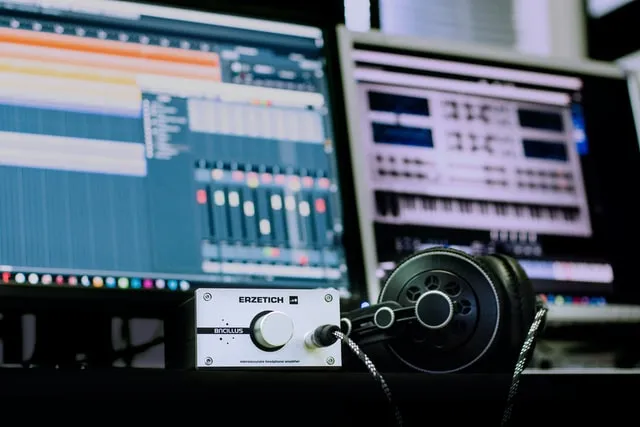
The most important thing is to find a DAW that fits your budget and looks and feels right to you. Each one has its own learning curve, so there's no one right answer.
Take your time getting to know different programs and pick the one that suits you best. At the end of the list below, there's a survey of the most popular DAWs.
Down to business
The Rumpalit Facebook group's recording preferences
Everyone has different needs and budgets, so I listed the mics by instrument. After them come mic sets, mixers and recording software. Pick out the ones you need from the list.
The answers haven't been edited except for clarity or typos.
The same mics come up in many answers. That's on purpose, so you get a clear picture of what most of the respondents prefer.
Overhead mics
Most popular in the survey
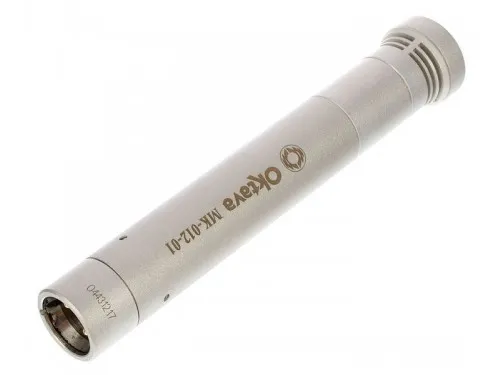
- Oktava mk-012, warm sound and the mics are durable.
- Oktava mk-012
- Audio-Technica AT-2035. Based on recommendations.
- Large- or small-diaphragm condensers, I'm not loyal to any brand.
- AKG AT 2050. I've had several brands/models. So far this one has been good.
- 2x AKG c214, fairly cheap and does the job, I also use an Audix adx 51 pair as an alternative.
- Oktava 012-01 pair. Good-sounding, but a little too bright, especially in an untreated room.
- AKG C 451. High quality, clear and bright. Good adjustment options.
- Rode M5 pair. Great value for the money.
- Warm Audio 47jr and Oktava MK-012. Both work in the studio and live, they sound good and don't cost a fortune.
- AKG C1000S
- AKG p17 pair or t.bone sc450 pair.
- Beyerdynamic mce 530 - Cheap and picks up the cymbals decently as an overhead.
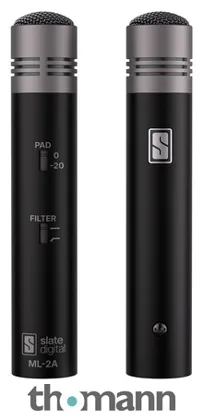
- Slate ML-2 in the budget class, 150e each and beats lots of mics that cost twice as much. As a bonus, a mic modeling plugin. If you have more money to spend, then AKG C414 or C451.
- Slate ML-2, a good basic mic with a flat frequency response.
- Slate Digital ML-2. A neutral and versatile mic, and the plugin that comes with it can emulate lots of classic mics, from dynamics to condensers. An affordable and pretty safe choice for almost any instrument.
- Oktava mk-012, because of the soft top end. Also works as room mics with the omni pattern. AIR Peacemaker, on the other hand, if you want an old-school kit sound and booming toms. These are pretty OK as room mics too.
- Behringer C3 pair. An affordable condenser pair that works.
- Sennheiser e614. Good and came in an affordable package.
- Røde nt2-a, excellent and versatile for its price class. You can do lots of other things with these besides overheads. Saves you from buying lots of mics.
- sE X1 D, a large-diaphragm condenser mic that works great both for close miking and as an overhead or room mic. Fairly affordable price.
- Schoeps stereo set mk4, the best-sounding mics for my thin and dark cymbals.
- Audio-Technica AT4047MP. I needed an all-around stereo pair, so I bought these when more experienced people recommended them. Good value for the money!
- Studio Projects B1. With a large diaphragm you get more of the whole kit's sound.
- T.bone em 700. I happen to own a pair of these. I also like the sound. If I'm feeling lazy, I just put one t.bone on the player's side of the drum kit, pointing straight at the bass drum pedal, at a height roughly between the ride and the snare. The problem with this technique is that you can't really play the floor tom with the stand in front of it, but the rest of the kit is balanced, and when the whole kit is recorded with one mic and you compress it, so the bass drum hits the compressor first and the rest of the kit dances around it, it sounds cool.
- 2 Shure pg81s. Cheap.
Snare
Most popular in the survey
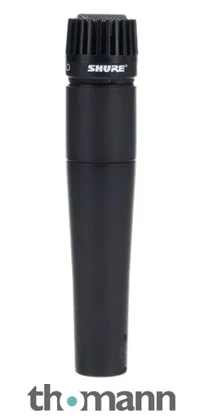
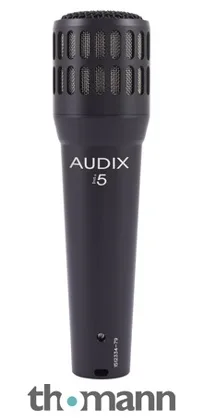
- Shure Sm57
- Shure Sm57 on top and bottom. Or alternatively an Audix i5 on top and a small-diaphragm condenser on the bottom.
- Shure beta 57 on top, Sennheiser 906 on the bottom. These have been fine. I'll try something else again sometime.
- 2 x Audix i5, all you have to do is open the channels.
- Shure SM57 on top. A t.bone 57 copy on the bottom. (The standard mic for snare).
- Shure Sm57. I've tested all kinds of mics, and I always come back to this one.
- Shure SM57, a classic, you can't go wrong.
- Heil PR22 on top and Audix i5 on the bottom, the PR22 is a reasonably priced choice instead of an SM57. Also works well as a vocal mic.
- Akg D40Beyerdynamic m201, good polar pattern, and the sound is good when it comes to bleed too.
- Shure Sm57 - The standard that works
- Lewitt MTP440 / SM57 / Audix i5, They all cost about the same, slightly different sounds, lately the Lewitt has been in use most of the time.
- Audix i5, better than the Shure Sm57. Batter head: Slate Digital ML-2. Resonant head: Shure Sm57
- SE Electronics V7. Less bleed than, say, a 57, and a beefier sound overall.
- Shure Sm57, the basic mic
- Shure Sm57. Always a safe choice.
- Audix i5 on top and Shure sm57 on the bottom, a basic, safe and good-sounding combination. You can't go wrong. And it won't break the bank. New, 100€ each, and used, 50-60€ each.
- Audix i5, an excellent and versatile basic mic. A fatter sound than the Shure SM57.
- Sennheiser md421, an excellent mic on drums in every way.
- Shure SM57 The industry standard, I already had one on the shelf.
- Shure Beta 57 on top, Sennheiser E604 on the bottom. The Beta has a better polar pattern than the basic 57. The E604 with its clip saves you one stand and works sound-wise as a bottom mic too
Bass drum
Most popular in the survey
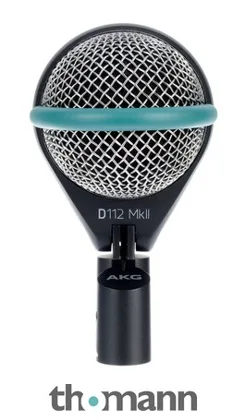
- AKG D112
- Shure Beta52, AKG D112
- Sennheiser e602 II. Good all-around sound, reasonable size and weight.
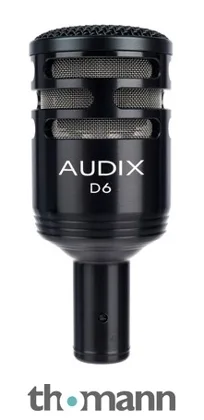
- Audix D6 close and EV RE320 at the port hole. The sound has been good enough this way.
- Audix D6 and Solomon Subkick, a pair that works really well, and in my opinion the Solomon is hardly any worse than Yamaha's equivalent, which has already been discontinued.
- Shure Beta52 (I used it in the school studio and found it good).
- Audix D6, great low frequencies. Clear, with a great slap.
- Shure Beta 52A, a safe choice too.
- Audix D6 and Sennheiser 602. Live, a 602 in both bass drums, in the studio a D6 and a 602 together in one bass drum.
- Akg D112
- Akg D112, a basic tool.
- Samson Qkick - A very good catch for the price. In a comparison it worked better than the e602, and I hit the price ceiling with the others (double bass drum kit).
- Audix D6, an amazing sound, though it sounds modern and maybe isn't right for jazz stuff.
- Audix D6, good sound right away
- Audix D6, a nice, fairly ready-made basic sound. Sub kick 8" element, this gives a full, warm feel to the low end.
- Audix D6. Good for metal stuff. A scooped sound out of the box.
- T.bone bd300, an affordable catch I came across.Audix D6. I like the sound.
- AKG D112, basic, reliable + affordable. Works for quite a few genres. If you ever switch bass drum mics, it also works great on the floor tom.
- (Same as overhead). sE X1 D, a large-diaphragm condenser mic that works great both for close miking and as an overhead or room mic. Fairly affordable price.
- Sennheiser md421
- AKG D112, a friend had an extra one.
- Electro-Voice N/D868. A bit of built-in EQ. Can handle a lot, though
- T.bone em700
- Sennheiser E602. Cheap.
At this point you have enough mics to get started!
The following are extras to get depending on your needs / budget
Rack toms
Most popular in the survey
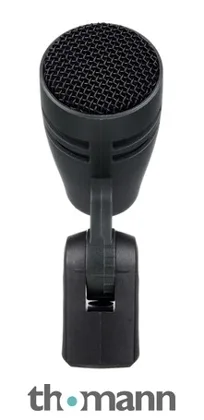
- Shure Sm57
- Shure Sm57, Beyerdynamic 87
- Shure Sm57 / AKG D40 / Beyerdynamic M300. The Shure works for pretty much everything, I use it on toms with white Ambassadors. The AKG D40 is compact, easy to place and has an OK sound. The Beyers work when you're going for a soft sound, for example with Pinstripe heads.
- Shure Beta 56A. Easy to position and a pleasant sound.
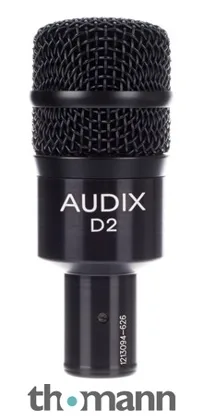
- Audix D2, tune the drum and open the channel.t.bone DC1200 (DM2)
- Audix D2 on the front tom, bright and clear.
- Sennheiser e604, good value for the money. A plus for mounting straight onto the hoop.
- Audix D2Akg D4 pretty OK, also works on snare.
- Samson Qtom - Picking up the close sound while I wait for something better
- Audix D2 or Lewitt DTP 340, fat and modern sounds, not overpriced
- Audix D2
- Sennheiser e604, I've liked it, good sound and easy mounting.
- Slate Digital ML-2Audix D2. Good for modern rock and metal.
- SamsonAudix D2. Good sound.
- AKG d40. Cheap and they work. Also works for recording guitar
- Sennheiser md421Sennheiser E604. Good mounting on the tom. Fresh sound.
Floor tom
Most popular in the survey
- Audio-Technica atm25
- AKG D112, Shure B52
- Audix F6. Turned out to be a bad bass drum mic, but gives the floor tom a nice low end and works well here.
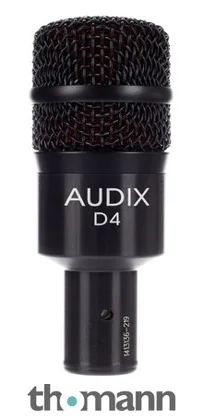
- Audix D4, tune the drum and open the channel.
- t.bone DC1200 (DM2). Cheap mics, but good tom sounds.
- Audix D4 and Audix D6. Great low frequencies, bright, clear and a good slap.
- Sennheiser e604, same as on the other toms.
- Audix D4 / Audix D6. The Audixes have a good pre-EQ in the mic itself, they work well live and in the studio too.
- 14&16” AKG D40, 18" AKG P2
- Audix D4 / P4 - The P4s from some set are pretty mediocre.
- Samson Qtom - Picking up the close sound while I wait for something better.
- Audix D6, Absolutely the best for more modern stuff, it has both low end and attack.
- Audix D4
- Slate Digital ML-2
- Audix D4. This one has loads of low end.
- Samson, tom mic kit, cheap.
- Audix D4
- AKG d40 or AKG D112
- Sennheiser md421
- Sennheiser E604. Good mounting on the tom. Fresh sound
Hi-hat
Most popular in the survey
- Audix ADX51
- Hi-hat and rides: Samson CO2. M-Audio's little condenser mic. Not specially chosen, more like it ended up there by chance. It has a nicely tight polar pattern and a nice soft top end.
- Shure sm57
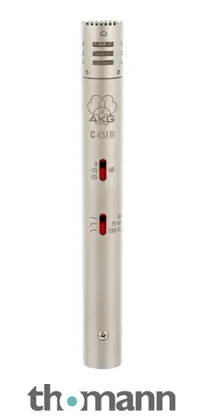
- AKG c451
- Hi-hat and ride - Shure pga181 - Cheap, but does the job for close miking.
- AKG c451 or Slate ML-2, the AKG has been on the hi-hat on hundreds of records, a great mic. You can get almost two Slates for the price of one AKG.
- Slate Digital ML-2
- Shure58, if anything.
- M-Audio's little condenser mic
- T.bone EM1200 (DM3) or a 57 copy.
- Shure S57 or Audix i5 for the aggressiveness.
- AKG C451
Room mics
No clear favorite
- Some cheaper ribbon mic. Warmth and plenty of low end.
- Se2200A (also as a bass drum front head mic when needed).
- Right now a Röde NT1. The brand doesn't really matter, but a large-diaphragm condenser that picks up the room sound.
- AKG c214
- Audio-Technica 2050. Drum room door open and a mic out in the hallway to pick up the space. Mic polar pattern set to omni or figure-8.
- Aaton spirit. High quality and clear. Picks up low frequencies from the corners well.
- Royer 121 / any ribbon pair.
- Behringer ecm8000 or Sennheiser 935 - Both work when you aim/place them right. They add grit and space to the sound, not so much the overall sound.
- Cheap "no-name" Chinese ribbon mics, an AKG C414 pair with the M/S or Blumlein technique.
- Aston originA.I.R Dragon Lady ribbons.
- AIR Blackbullet, AIR Peacemaker, Oktava mk-012 with omni patterns. Unfortunately I usually record in small rehearsal spaces, so it's hard to judge room mics. Still, they bring a certain kind of soul to the mix, even if they're not top quality.
- Audio-Technica at-4050. I use it for vocals, but it's also a good-sounding mic as a room mic.
- The T.Bone rb500, 2 of them. Despite the cheap price, an INSANELY usable ribbon mic. Works well as a room and overhead mic. A nicely soft top end. Thanks to its figure-8 pattern, it fits Blumlein miking well. With this and the nt2-a you get working Mid/Side miking.
- (Same as overhead and bass drum). sE X1 D, a large-diaphragm condenser mic that works great both for close miking and as an overhead or room mic. Fairly affordable price.
- Anything. Just lots of compression.
- If I use a room mic, I use the Zoom r16's own stereo mics.
Mic sets
Most popular in the survey
- No preferences, I've bought my mics one at a time.
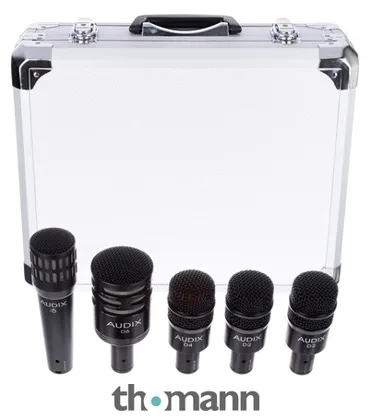
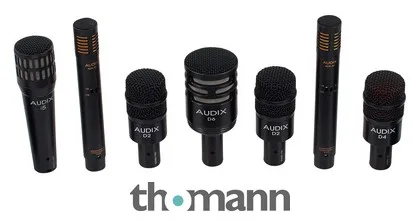
- Audix Dp7 mic set, has everything essential, a high-quality series.
- On the toms I use mics from the t.bone DC1200 package. They stayed in use when I bought the mics mentioned above for the other drums. At some point I could replace them with Sennheiser 604s. But they work really well too.
- Audix DP7. A good set that you can get at a good deal right here in Finland.
- If I get to choose, then an Audix D series set. It's good for a bit of everything. Among the cheap ones, the Samson set is a decent starting point for upgrading
- Audix DP5-AAudix DP5-A. A versatile set. Good clamps for live stuff. Also works for miking guitar and bass cabs.
- Well.. Sets are always a bit of a compromise, but if money is tight, then maybe some superlux drk set could work. If you have, say, 400€ to spare, then something like the Audio-Technica mbdk7. Maybe some t.bone stuff could work if it's a hobby and you're just starting to record. Every set has good and bad sides, the more money you put in = the more good.
Audio interface or mixer
Like I said earlier, when you're getting an audio interface or mixer, the most important thing is to think about your own needs.
-> Are you going to mix your playing in real time? If yes, you need a mixer. If you're only going to mix recorded audio, an audio interface is enough.
-> Are you recording your own drums through four mics, or does the whole band need one mixer with channels for every instrument, live mixing from a smartphone or other extra features?
This is probably where you'll have to do the most research to find the option with the best value and features for you.
Most popular in the survey
- Liquid Saffire
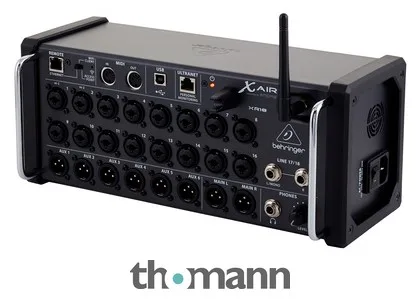
- Behringer XR18. Lots of channels and features, an easy-to-use interface, live mixing from a smartphone.
- Yamaha AW2400 (8-track), top-of-the-line preamps, effects, etc.
- Right now a Zoom r16
- Presonus RML16AI. Enough of everything, good preamps and low noise.
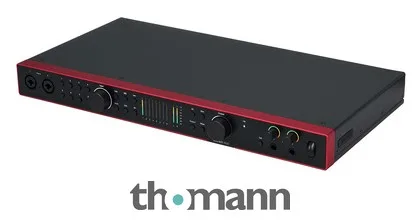
- My mixer is Focusrite hardware, Focusrite 8 clarettPrex and clarett octopre, 16 channels in at once. Focusrite has good product support, I've gotten support from them even in the middle of the night.
- Soundcraft Delta 200 (32ch). Good EQs: you can get the sounds right while recording and send the monitoring to headphones from the auxes with no latency (it doesn't go through the software). I have a recording studio, so I need that many channels. Drums usually take 10-11 ch.
- Focusrite Scarlett 18i20 1st gen. A quality piece of gear, enough inputs and outputs.
- RME UFX - interface, Behringer ADA8200. RME is the most reliable interface live, and it works just as well in the studio when you add more preamps over ADAT (the Behringer ADA8200). The advantage of the RME is the 3-band EQ and dynamics on every channel, so you can mix good-sounding stuff straight to the headphones with zero latency.
- Soundcraft FX16II. The mixer has 16 direct outs, which I used to get the sound into a Tascam 16x08 audio interface.
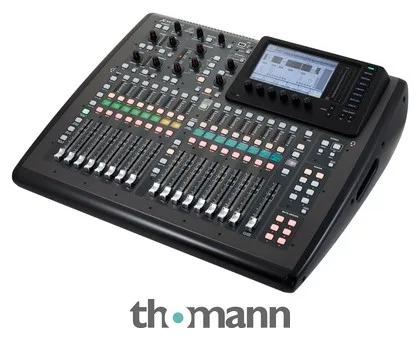
- Behringer x32 compact, good live and recording features in one package.
- Behringer X32 - The rehearsal space mixer. Multitrack works, even though the preamps aren't the best in the world.
- Behringer X32 fullsize / Focusrite Scarlett 18i20, the bigger one for work, if you want to mic up more than a small kit. The Scarlett for small kits and mixing work.
- Allen&heath sq5, the best budget mixer right now.
- Behringer X32 Compact. A solid all-around desk for both the studio and gigs. Monitoring and adjusting sounds in the headphones is easy and fun.
- Focusrite 18i20, Behringer ADA8200, Presonus Eureka channel strip.
- Mackie profx16, chosen for the band and works for this too.
- Midas Mr-18. Compact and versatile.
- I guess this means the interface? I use a Focusrite 18i20 audio interface with Behringer's adat8200. This package goes for 500-600€, but on a tight budget you can get great results with just four mics, and 4-channel audio interfaces are cheaper
- Some old 4-channel Behringer and the rehearsal space's shared Yamaha (8-channel).
- Focusrite 18i20, cheap and good.
- I mean audio interface: RME FF800 I got a really good piece of gear for a relatively low price. It's reliable, has a good neutral sound, can be expanded if needed, RME has good product support.
- Presonus StudioLive 16.4.2. Works well and easy monitoring
- Zoom r16. Fits my budget, and interfaces with the same features cost twice as much. Recording on a multitrack recorder gives you a more analog workflow, which pushes you to play the tracks all the way through correctly from start to finish, because you can't edit them on the fly. The only minus with the Zoom is the mic preamps being a bit too noisy, but that hasn't bothered me too much yet.
- Zoom livetrak L12.
DAW (Digital Audio Workstation)
Most popular in the survey
Reaper
Pro Tools
Logic Pro
Cubase
- Reaper. I'm used to it and you can do everything with it that you can with the others.
- You can do everything with the aw2400.
- Cubase. I'm used to it and it's turned out to be stable.
- Presonus Studio One v4 professional. Back in the day I bought a license for a lower version for five euros and got hooked. Good, capable software that never crashes or loses material.
- Cubase 10Pro, I've always used this maker's products, drum editing is easy.
- Pro Tools. The industry standard. I'm used to it/learned to use it, ever since my media assistant studies.
- Reaper. Affordable, and a really pro DAW for the price. Clear and easy to use.
- Reaper. Cheap and versatile.
- Logic X and Pro Tools. Logic for quick drum demos, because I do everything with it anyway. Pro Tools for drum recordings when we're actually making a record or some other release, because the editing options are way beyond other software.
- Reaper. Free and eeeasy.
- Cubase, I've used it for over 15 years, the only one I've learned to use.
- Cubase 5 and 10 - I've used Cubase ever since the sx3 version. A couple of detours haven't shaken its position yet.
- Cubase Pro 8. I've worked with Cubase since the SX3 version, no reason to switch since I already "know" this one.
- Logic x/Harrison mixbus 32c.
- Logic Pro X A reliable, long-time partner, a good selection of plugins and an affordable price.
- Reaper. Unbeatable value for the money.
- Logic, usually.
- Pro Tools. The first one I started using, and I haven't felt like switching.
- Reaper! Cheap, straightforward to use, doesn't limit you in any way even if you haven't bought a license.
- Cubase before, now GarageBand. I used Cubase for almost 15 years and I'm used to it, but now I switched to GarageBand because it's free and easy to use and worked seamlessly with my iPhone and iPad.
- Reaper, free, easy to use and lightweight.Pro tools. I needed to get one session open for post-processing. A big part of the people I work with use the same software. Versatile, but also simple to use.
- Harrison Mixbus. It's easy to get a good sound with the EQ and compressor on the channels.
- I move the tracks from the Zoom to a hard drive and mix in FL Studio. FL is very clear to use, the mixer, routing, plugins, automation, etc., and I really like FL Studio's stock eq1 and eq2. 1 is good for narrow cuts of frequencies and 2 for broader shaping.
Learn more: Reaper, Pro Tools, Logic Pro and Cubase. YouTube has lots of tutorials for each one, and by testing them you'll find out which one suits you best.
Extra
Questions for the respondents
When asked how many mics they use:
50% of respondents use 10 mics
20.8% use 9 mics
12.5% use 8 mics
A few individual respondents used 7, 4, 3 or 2 mics.
According to the respondents' estimates, buying these new would cost:
48% of respondents' setups would cost over 2000 euros
12% of setups would cost 1100-1300 euros
8% of setups would cost in each of these price ranges: 200-400, 400-700, 700-900, 900-1100 and over 1500 euros.
How do you start recording your drumming?
A good way to start is to invest in a good enough computer (which you probably already have) and a good enough mixer with enough channels for your future needs too. 8 channels is usually a good standard for just a drum kit.
After that you can start buying mics little by little as your budget allows. It's also smart for learning to buy and learn to mix a couple or a few mics at a time, rather than buying 10 mics right away and trying to set up the whole kit as a first-timer.
To wrap up, the extra comments from the survey
- A lot of the time people want to make demos of all kinds of things within the band. There's maybe no point in the drummer sinking a ton of money into gear alone. Get a modern, cheap digital mixer for the band, so you have one and the same piece of gear for rehearsals, demos, recordings and why not gigs too, and the whole band can chip in on the costs.
- On a tight budget it's challenging to find gear and equipment, but not impossible. You just have to look up information and make the so-called right choices based on it. Even with four mics you can do great for hobby stuff. Don't invest money blindly, especially if you don't have much. And it's worth investing with the long term in mind, for example: if I'm planning to record a whole band at once or something else big, a 4-track audio interface wouldn't be a big enough investment in that case. Or if I'm recording pop on a small kit for fun, there's no sense in investing in 18 channels.
- Miking techniques could have a survey of their own.
- I don't play gigs or go to studios, I play at home. The other members of my remote band work on their own parts on the other side of Finland, and we put the results together and release them through Distrokid.
- My recording setup also needs a computer, either a Mac or a PC, and that's also an essential part of the total budget
- My mixer doesn't have a USB/Firewire or similar connection (others might not either), so I still need an audio interface/extra preamps before the computer. I use an M-Audio Profire 2626 and a Behringer ADA8200. These are included in the price above.
- Usually three room mics, one close and two far away.
- When you figure out your own needs and budget, it's easier to start looking for gear and mics. And you don't need to be rolling in money either.
- The survey didn't ask about mic stands and cables. They can be a big part of the price.
Besides the mics, it's worth paying attention to your drum kit and the room, because an untreated room and a badly tuned drum kit will make any recording pretty low quality.