 Tasodrums

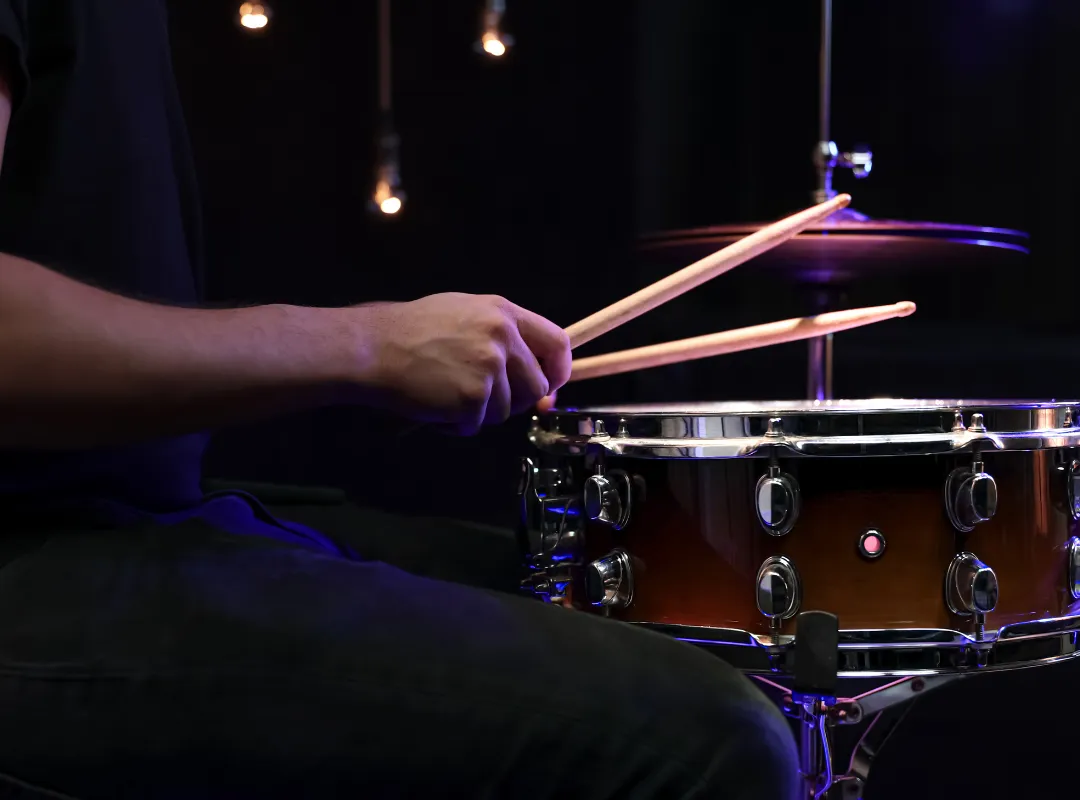
Practicing dynamics
In music, dynamics means differences in volume between instruments, strokes, notes and limbs. Dynamics is one of the things that sets a drummer who has played for a long time apart from someone who just started.
IF YOUR PLAYING HAS NO DYNAMICS AT ALL, YOU MIGHT SOUND LIKE YOU'RE YELLING THE WHOLE TIME. AT JUST ONE VOLUME.
Not very nice to read, is it? I could swear the "reading voice" in your head started yelling while you read that sentence.
Another example is that teacher we've all run into at some point in school. They talk quietly in a low voice, never stop to pause, and just keep going through the lecture in a monotone. That teacher is hard to follow, because listening gets pretty boring.
The same thing happens in drumming (and music). It's good to have lots of options when it comes to volume.
Sometimes it's right to play really loud, when a song or a section clearly needs the drums up front. Then again, you might also bring your volume down in a certain part of the song.
Like speech with pauses and different emphasis, playing that uses dynamics in a varied way, and especially in a way that suits the situation, is more enjoyable and easier to listen to.
Exercise 1: Human mixer
For a drummer, dynamics means many things. You usually play several instruments of the drum kit with several limbs at the same time, and you usually don't play all of them at the same volume. On top of that, you might play individual notes louder or softer with each limb. The more different volume levels you can get from your individual limbs and notes, the more interesting and versatile your playing sounds. Keeping the style in mind, of course.
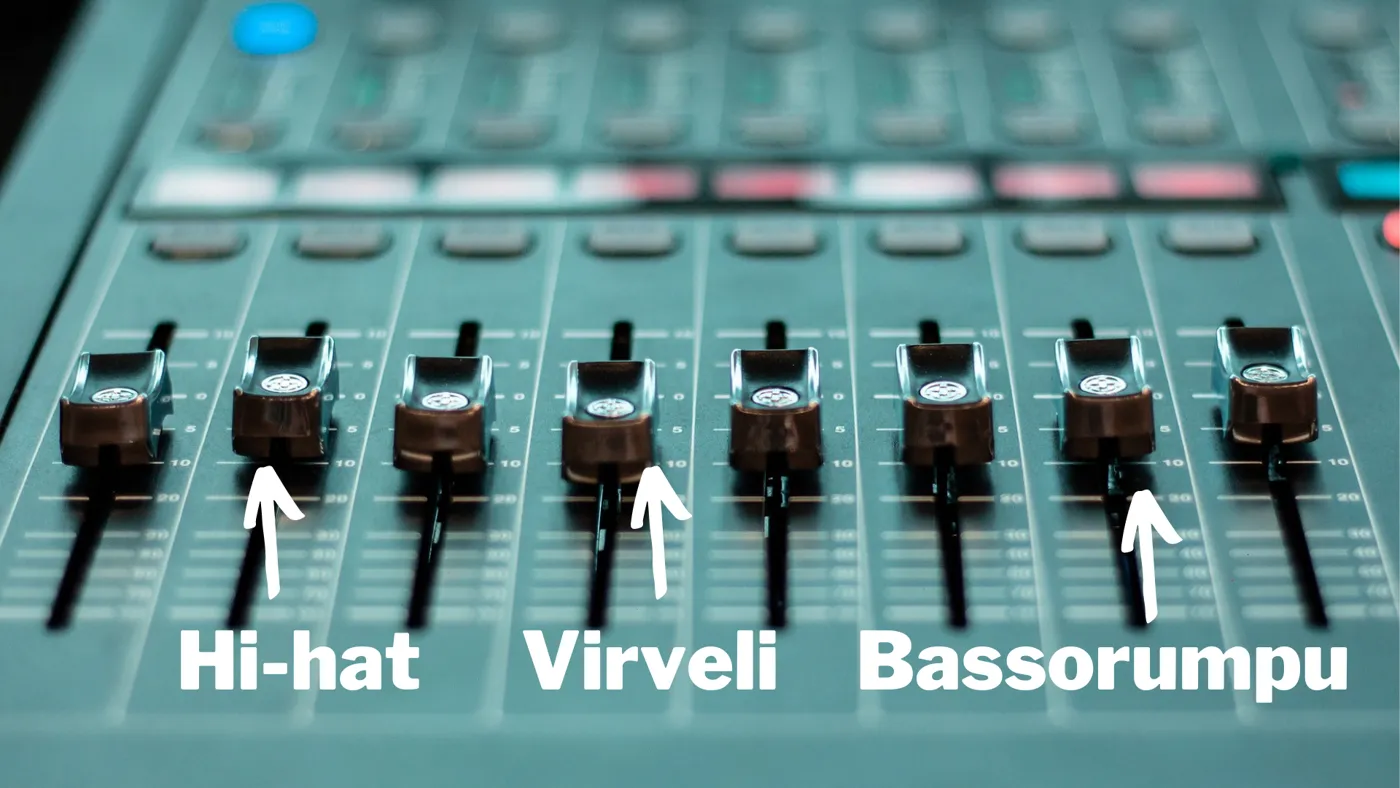
In this exercise, imagine that both your hands and your bass drum foot are on their own channels in a mixer, and you can adjust the volume of each limb separately by pushing the channel faders up and down.
1. Normal level
Start by playing so that every limb plays at as close to the same volume as possible. Try to find a good middle level, not too loud and not too quiet. Take it easy, don't rush. Play several bars or even minutes of the same version of the groove, so you really develop your control of dynamics.
2. Hi-hat up and down
In the first step, try to raise the volume of the hi-hat strokes without raising the volume of the other limbs, like you were pushing the hi-hat up in the mixer. Play like this until your limbs feel under control, then bring the hi-hat back to the middle level.
Next, bring the hi-hat volume down as quiet as you can without changing the volume of the other limbs.
3. Snare up and down
Go back to the middle level and do the same with the snare - First volume up, back to the middle level, and then down.
4. Bass drum up and down
Do the same with the bass drum.
Watch a short video about practicing dynamics
Practice with different songs
Once you've tried raising and lowering the volume of each limb separately, think about what felt easiest and what was hardest.
Also try practicing moving from one limb and volume to another without pausing. You can also practice raising and lowering two or all of your limbs at the same time.
This pretty straightforward exercise is extremely effective for practicing dynamics. It's worth adding to your regular practice with different grooves and tempos.
To make your practice more musical, play the exercise along with real songs, drumless tracks or backing tracks. Make sure the dynamics exercise doesn't just stay on paper, and that you can adjust your playing in different grooves, tempos and styles.
Accents
Let's move toward smaller details, from individual limbs to individual notes. When it comes to dynamics, accents are essential in drumming. They're used a lot, and they really make a difference. An accent is simply a note that's louder than the notes around it.
An accent is marked with a wedge above the note. Listen to two examples where the accent is moved to a different spot, but the notes themselves are the same.
Practice accents on the snare and hi-hat
Below are two exercises. In the first one the accent moves between two different spots on the hi-hat, and in the second one on the snare. Listen to how much the groove changes just by moving the accent.
Rimshot
Next, let's go over a couple of other ways to get dynamic differences, especially out of the snare. The first one is the rimshot.
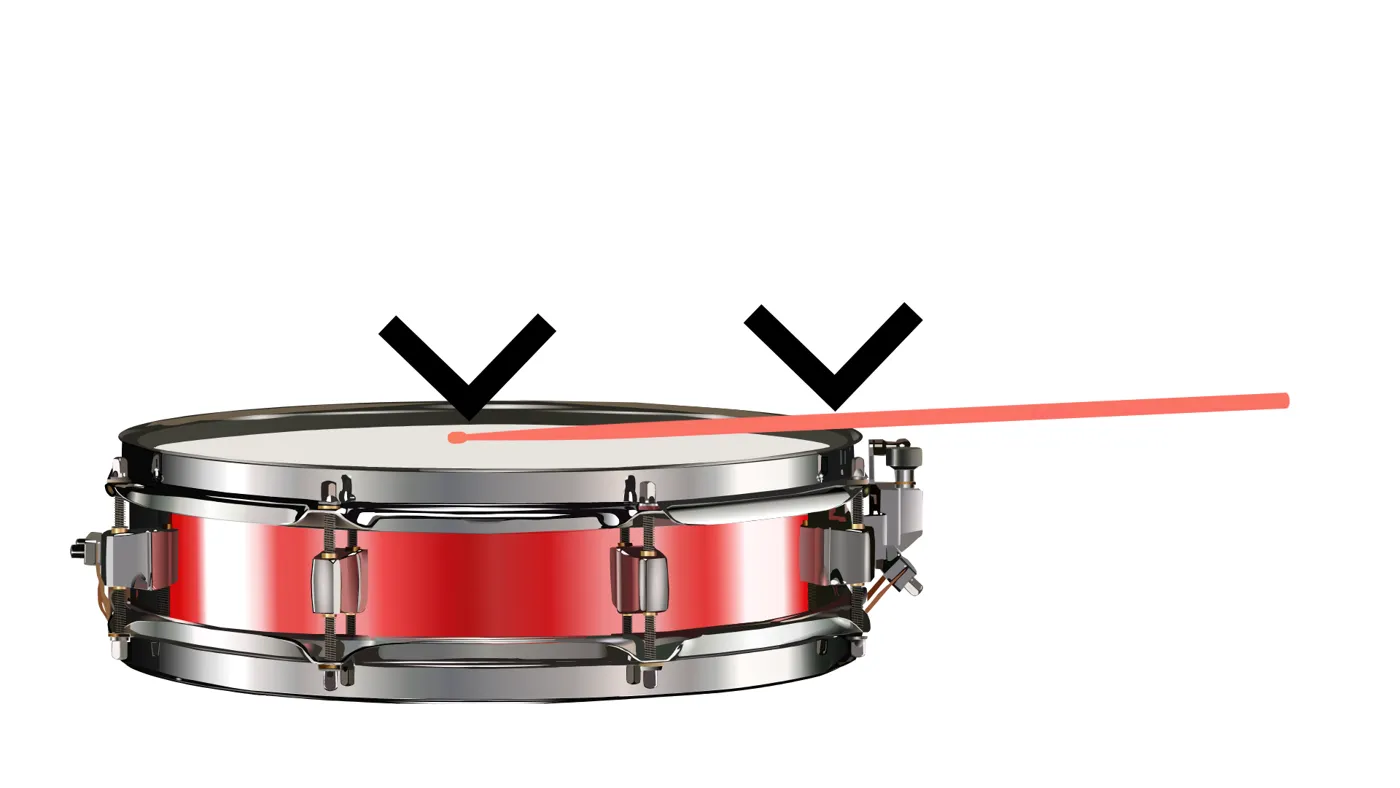
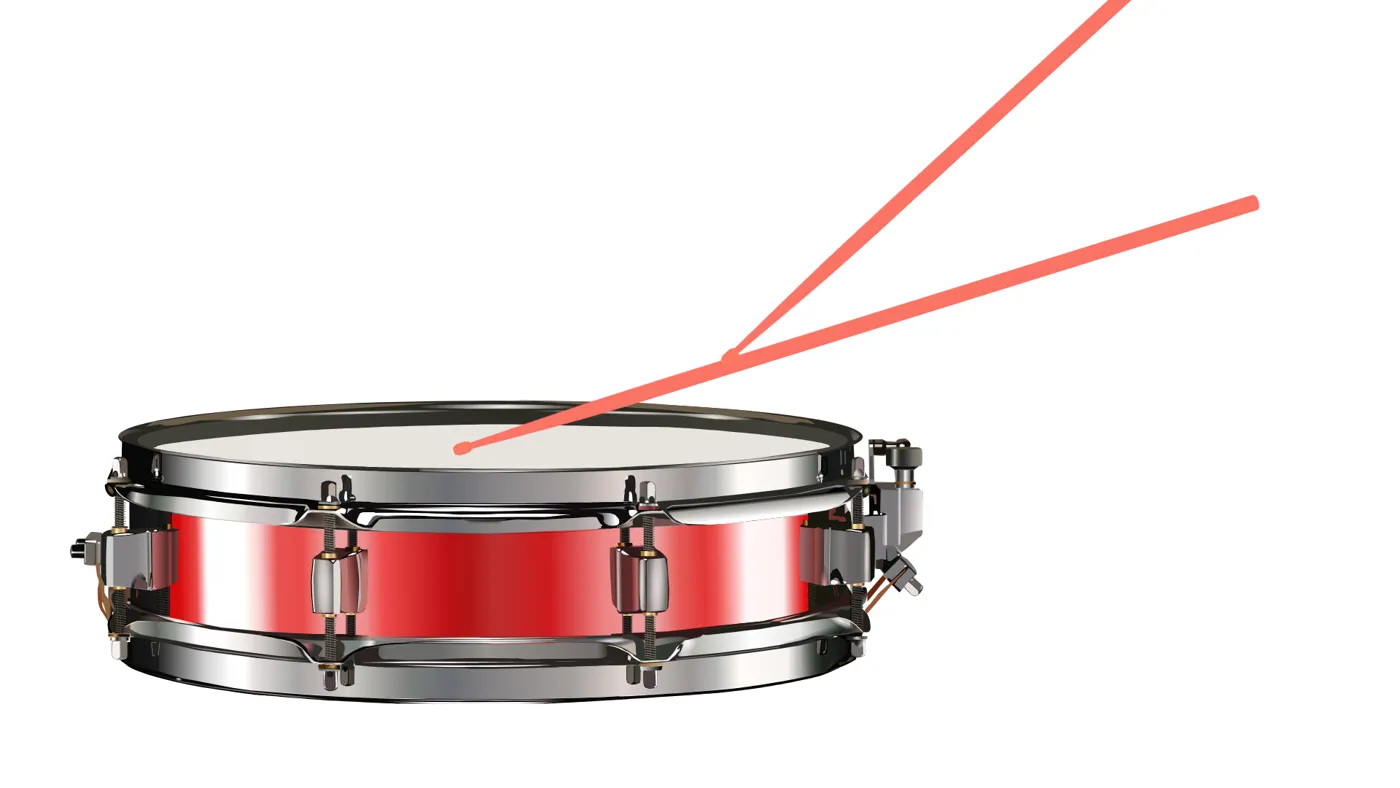
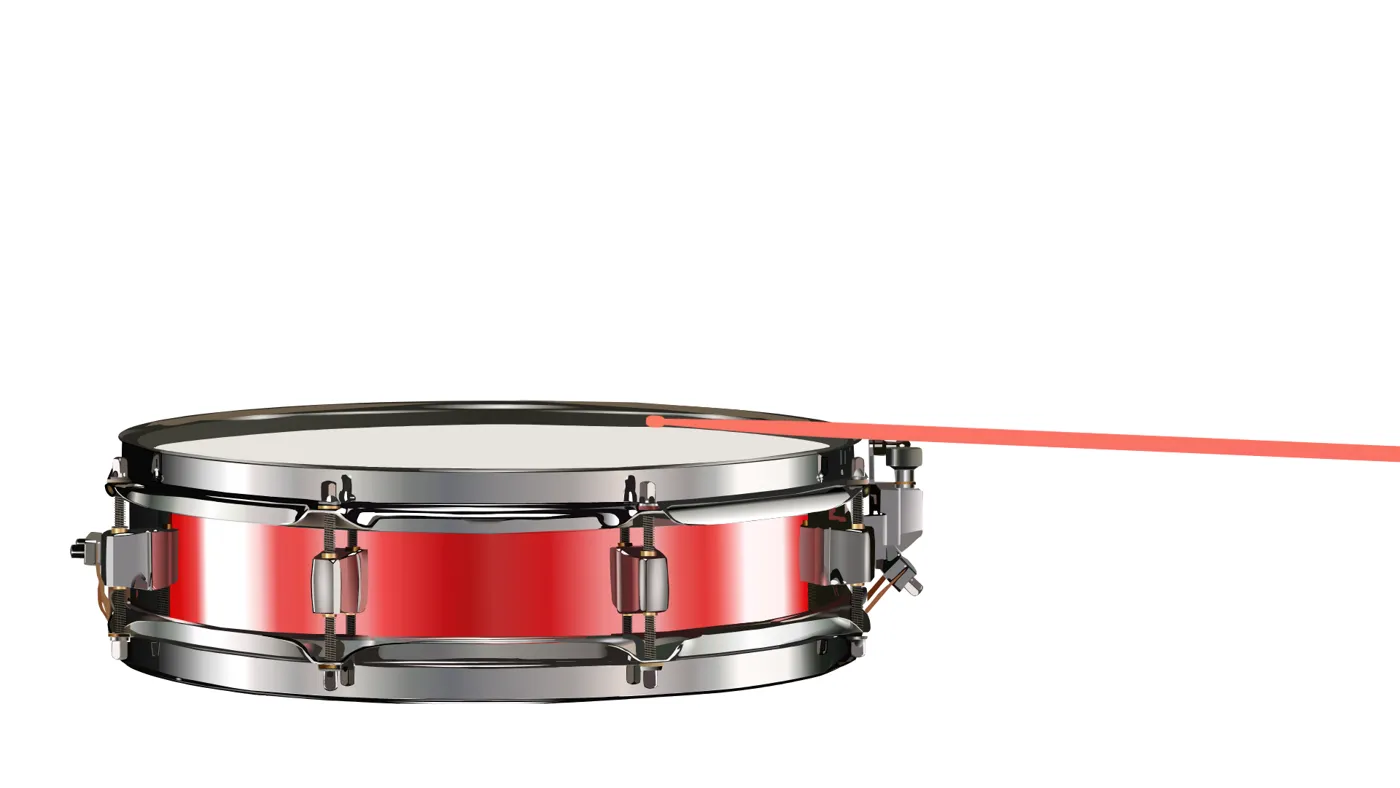
In a rimshot you strike so that the tip of the stick hits the snare head at the same time as the shaft of the stick (around the middle of the stick) hits the snare hoop.
This stroke makes a louder sound than a normal snare stroke, and it's used a lot, especially in rock and metal, but in other styles too.
Practice rimshots one stroke at a time, and only after that with a groove. The hardest thing about rimshots is getting them even and consistent, so take your time practicing where you hit.
You should be able to play a rimshot effortlessly among your other strokes, but if your snare is too low, for example, the stroke can be hard. Pay attention to the height of your snare and your throne if rimshots feel difficult to play.
You can also try hitting so the tip of the stick lands right in the center of the drum, and also a couple of centimeters off center. The sound often gets a lot fatter when you don't hit dead center.
You can also try flipping the stick around in your hand and notice how hitting with the thicker end changes the stroke.
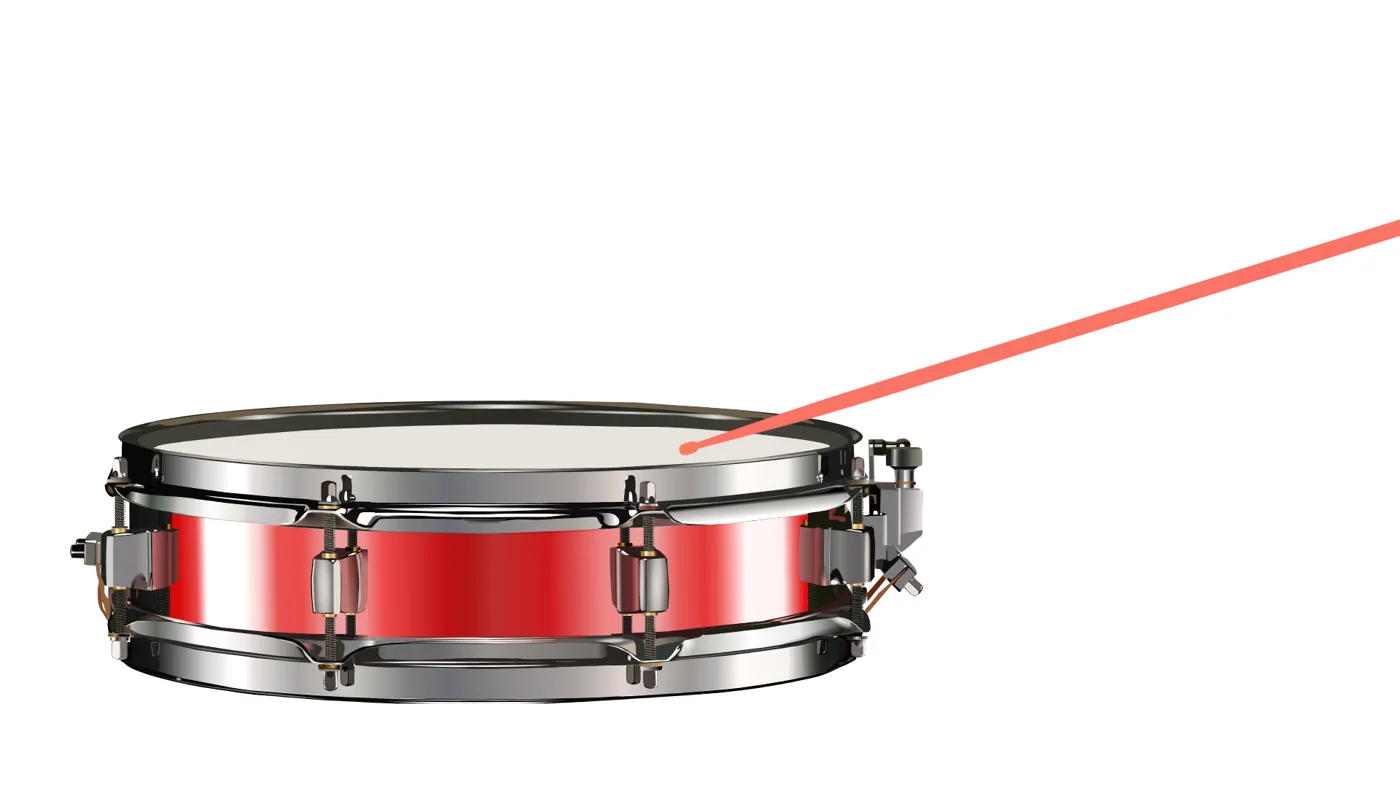
You can also play the rimshot right at the edge of the snare. The sound becomes really different and is very useful in lots of music styles.
Watch the Red Hot Chili Peppers drummer's video on rimshots
Extra rimshots
A couple of fun extra tricks for snare playing are, for example, the stick-on-stick stroke, where you lay one stick on the drumhead and hit it with the other stick. Another good extra sound is hitting just the snare hoop.
Practice rimshots
Practice rimshots by mixing them in with normal snare strokes. Focus on a solid stroke and where you hit. Compare the sounds and make changes, for example to your snare height, if needed.
Cross-stick
Let's go to the other end of dynamics with the snare, to a way of playing the snare more quietly. In a cross-stick stroke you place the stick and your palm on the drumhead, and you play the stroke by lifting the butt end of the stick and hitting the hoop with it while the tip of the stick stays on the head. The motion isn't complicated, but it's hard to explain in writing, so definitely watch the short cross-stick video below.
Practice cross-stick
Try normal snare strokes with cross-sticks in between. This stroke is written on the snare drum line in notation, but with an x.
Ghost notes
Let's move to the even quieter end. With ghost notes you play small strokes at a very low volume, often between the stronger snare strokes on 2 and 4.
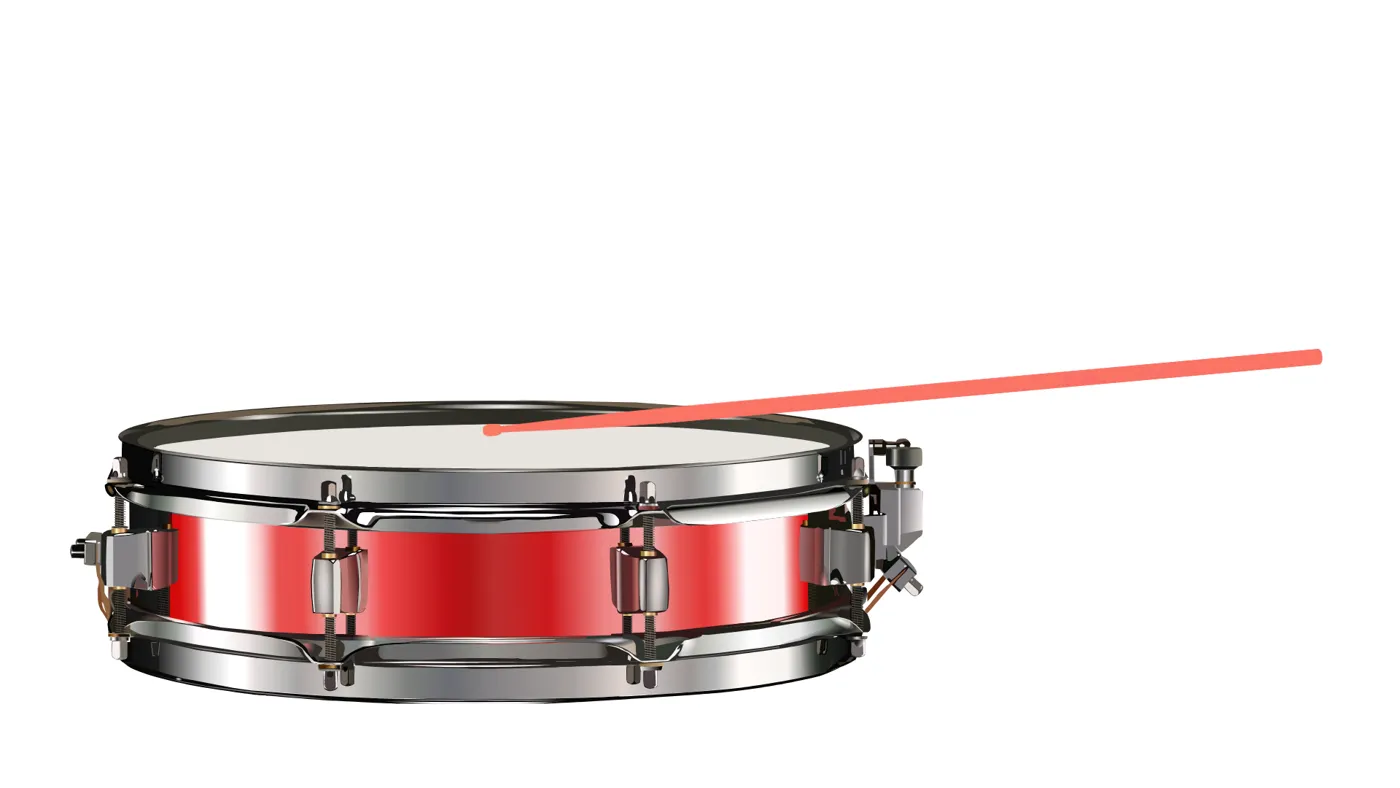
If you read part one of this blog series, you'll remember what a tap stroke looks like. The stroke starts low and ends low. This is the technique to use for ghost notes.
No finger motion, no bounce. You pretty much just drop the stick from low onto the head, or "flick" a small stroke with your wrist.
Practice ghost notes patiently
Ghost notes are at their best when you basically can't pick them out of the song at all, but if they suddenly stopped, you'd notice the difference right away. In a way, it's a stroke that goes unnoticed, but also has a big effect on the groove. A ghost note is marked by putting the snare note in parentheses. There are examples in notation below.
Take ghost note practice seriously, it will take your playing forward.
Practice ghost notes
Practice ghost notes little by little, first just on a practice pad or snare, so the stroke height starts to feel natural. Only then add ghost notes to a groove. Let's use this groove as the base.
Adding ghost notes
In notation, a ghost note is written as a normal snare stroke with parentheses around it.
Ghost notes on 2 e and 4 e after the snare stroke
Two ghost notes in a row
Move the ghost notes around
Now you should have the tools to start practicing dynamics in a few different ways. Focus on each limb separately, and also make sure your dynamic level suits the style or the song you're playing. Rock is played louder than bossa nova.