 Tasodrums

The bass drum pedal
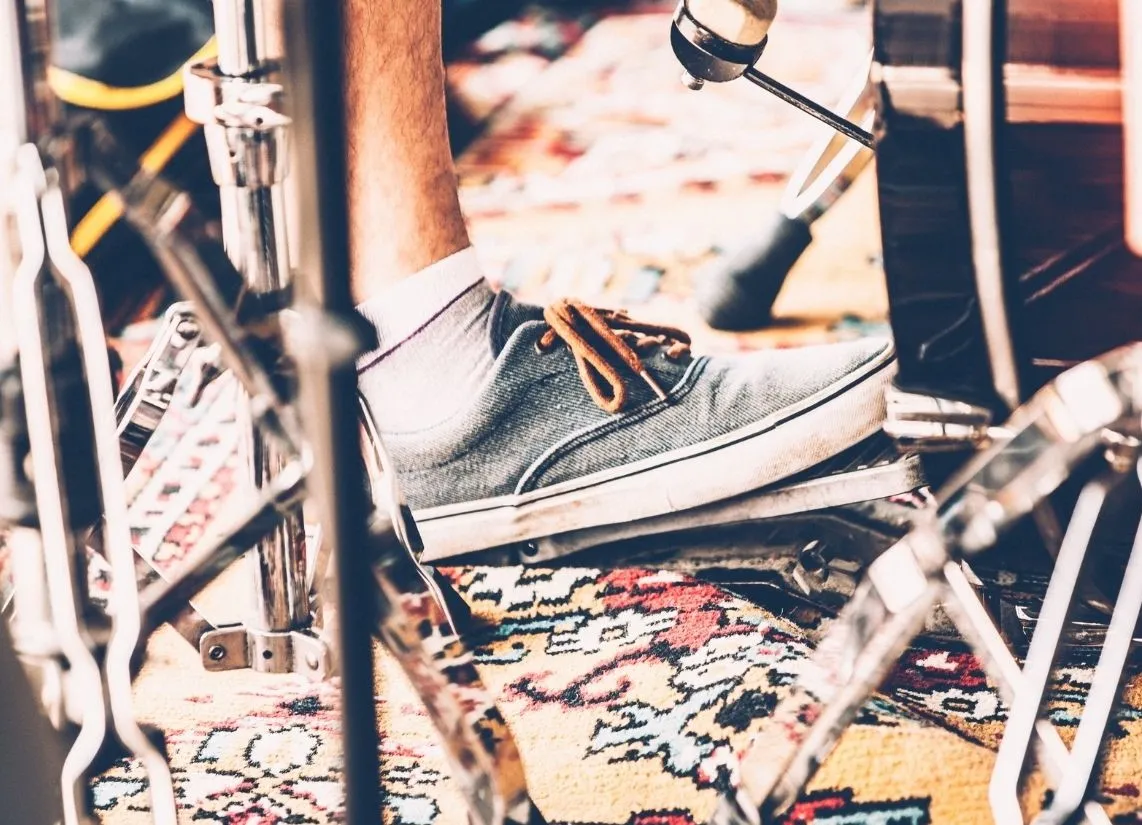
The bass drum is the only instrument in the drum kit that you play only with your feet. Things that affect bass drum playing include the size of the bass drum, the pedal, and your sitting position, and in a way also the shoes you're wearing (or playing without shoes).
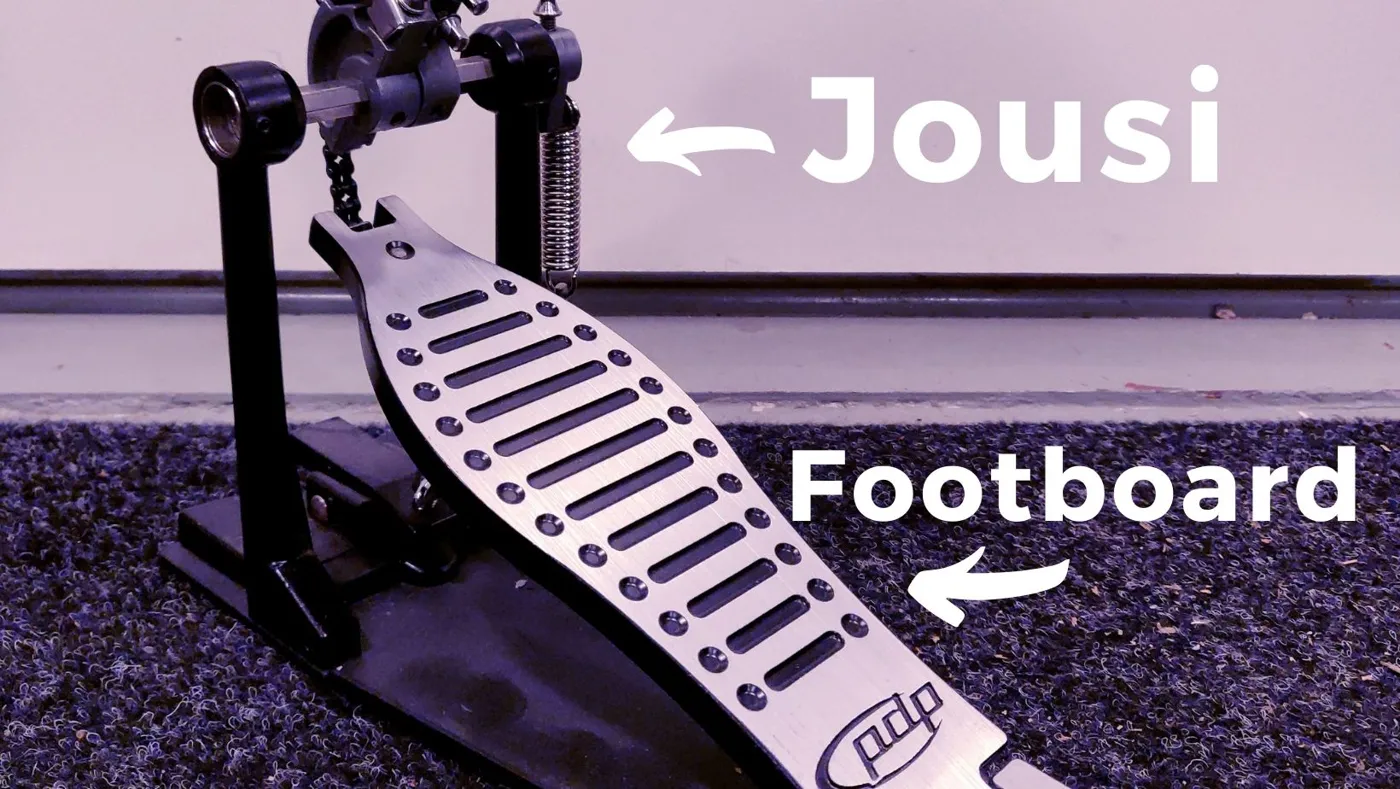
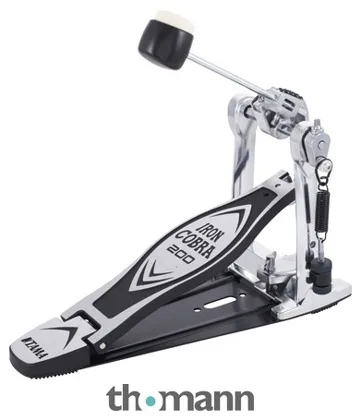
First, let's go over how a pedal is built. As you can see in the pictures, a pedal has lots of small parts, but let's focus on the four most essential ones here.
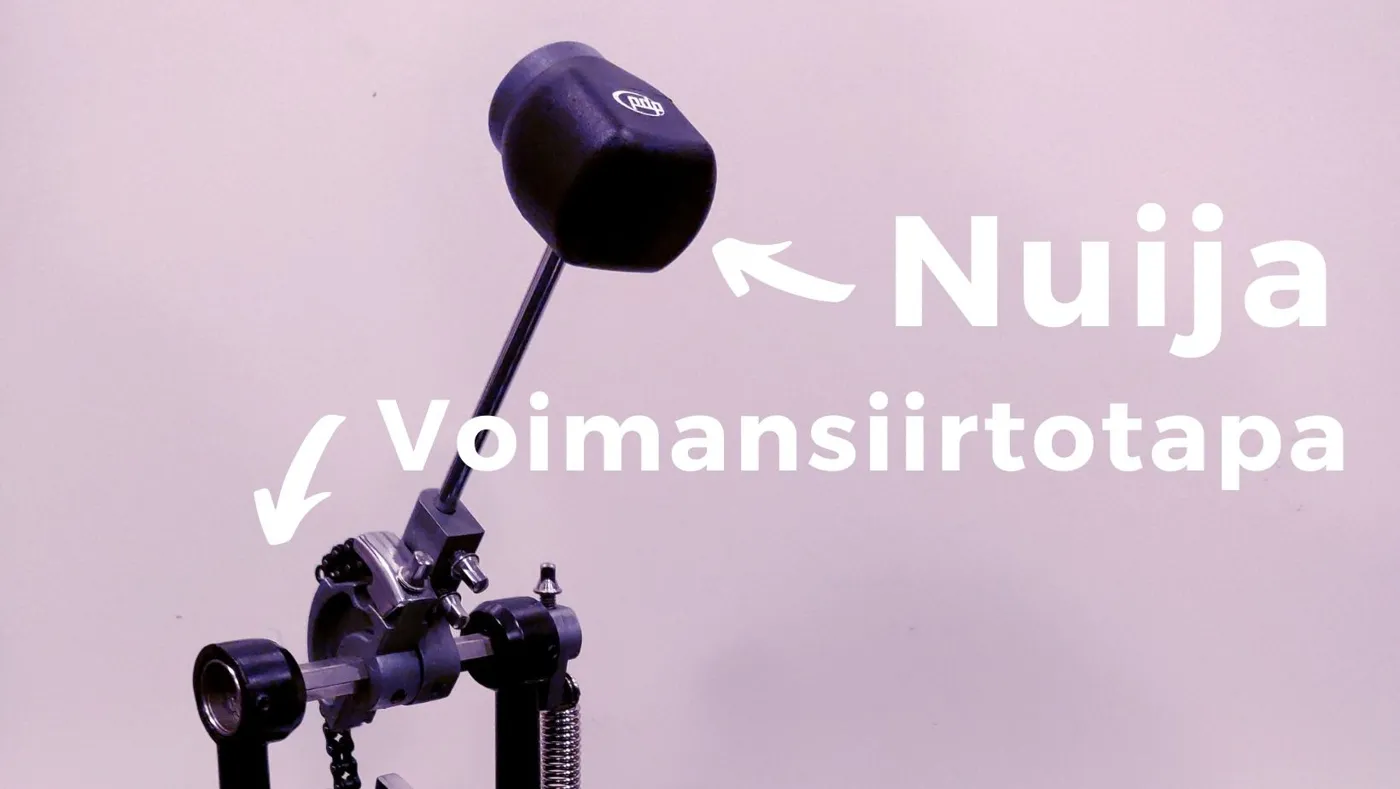
Let's start from the top.
There are different kinds of pedal beaters. They differ in things like sound and feel. Beaters are made from materials like felt (pressed wool), wood and plastic.
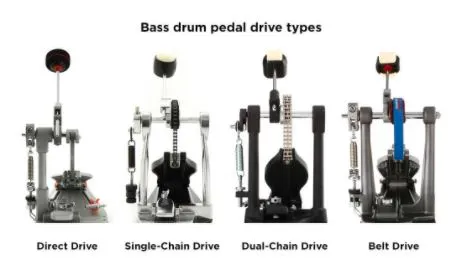
The drive, just like the name says, is the mechanism that moves the beater into the bass drum head when you press the pedal.
There are four different kinds:
direct drive, chain drive, double chain drive and belt drive. The most common ones are chain drive and direct drive.
Watch the video for more tips on adjusting your bass drum pedal. There's no point trying to explain these in text when a video makes it so much easier to understand.
Single or double pedal?
There are a few different setups a drummer can choose from.
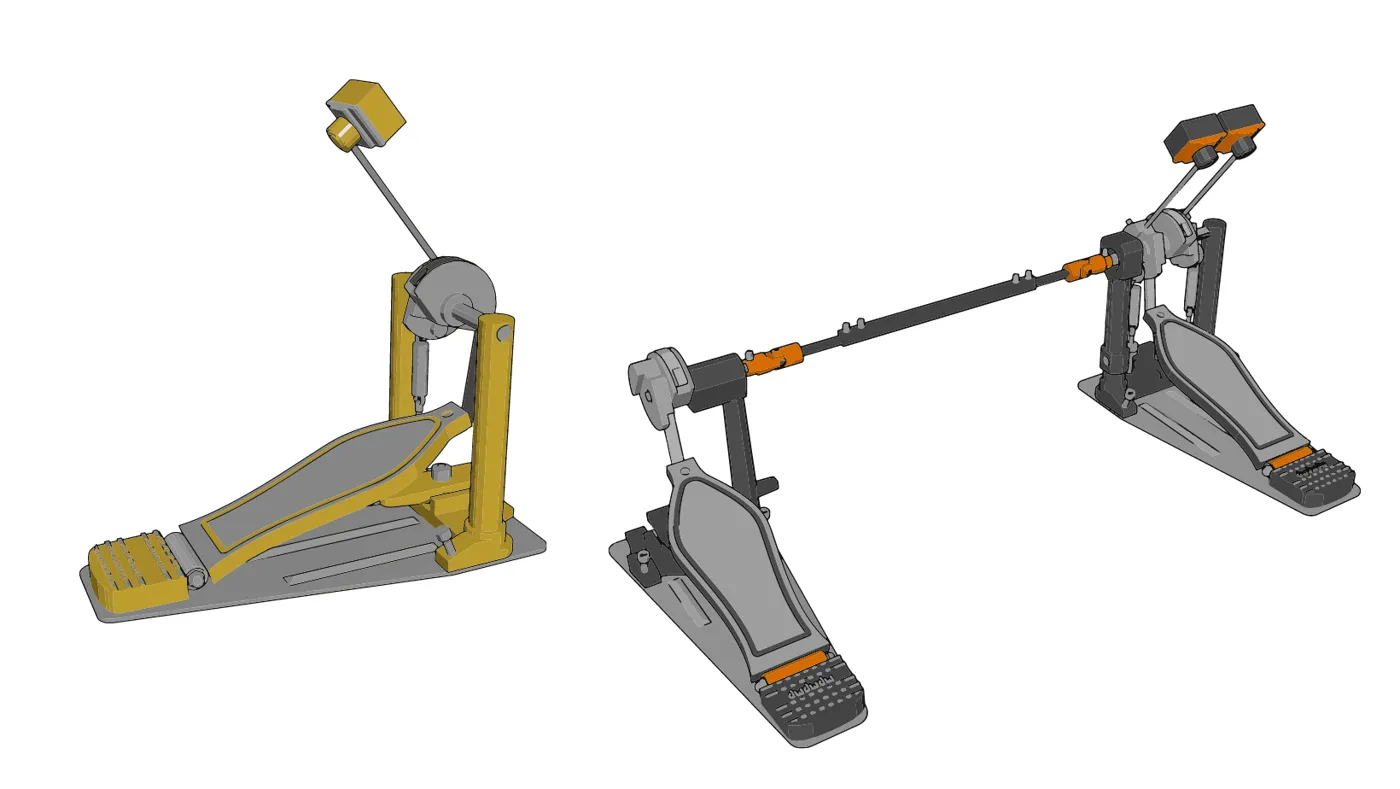
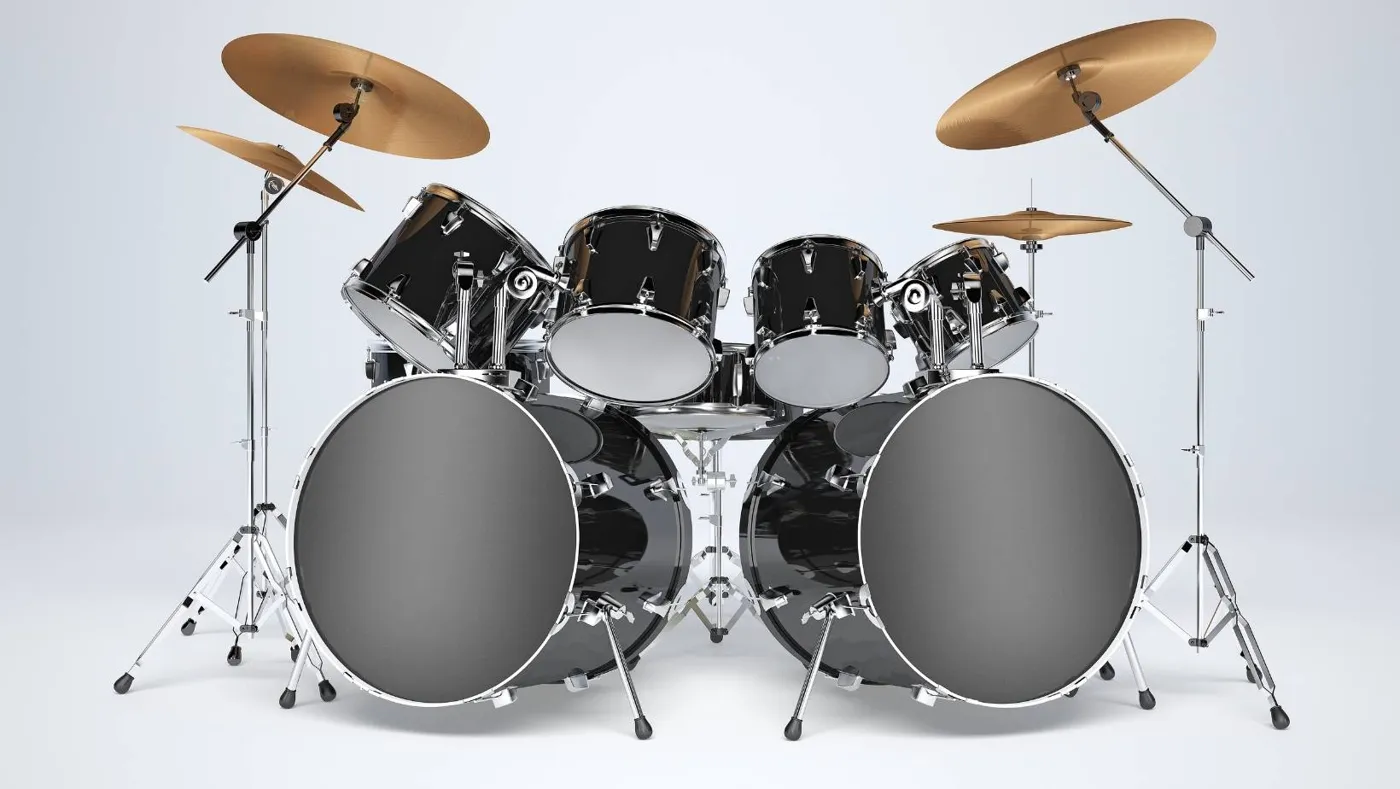
- A single pedal and one bass drum
- A double pedal and one bass drum
- Two single pedals, each with its own bass drum (a double bass drum kit)
At its simplest, the choice depends on the size of your space (a big kit with two bass drums doesn't fit everywhere), the style of music and your own preferences. There's no right answer, so make your choice based on things like the ones above.
Sitting position
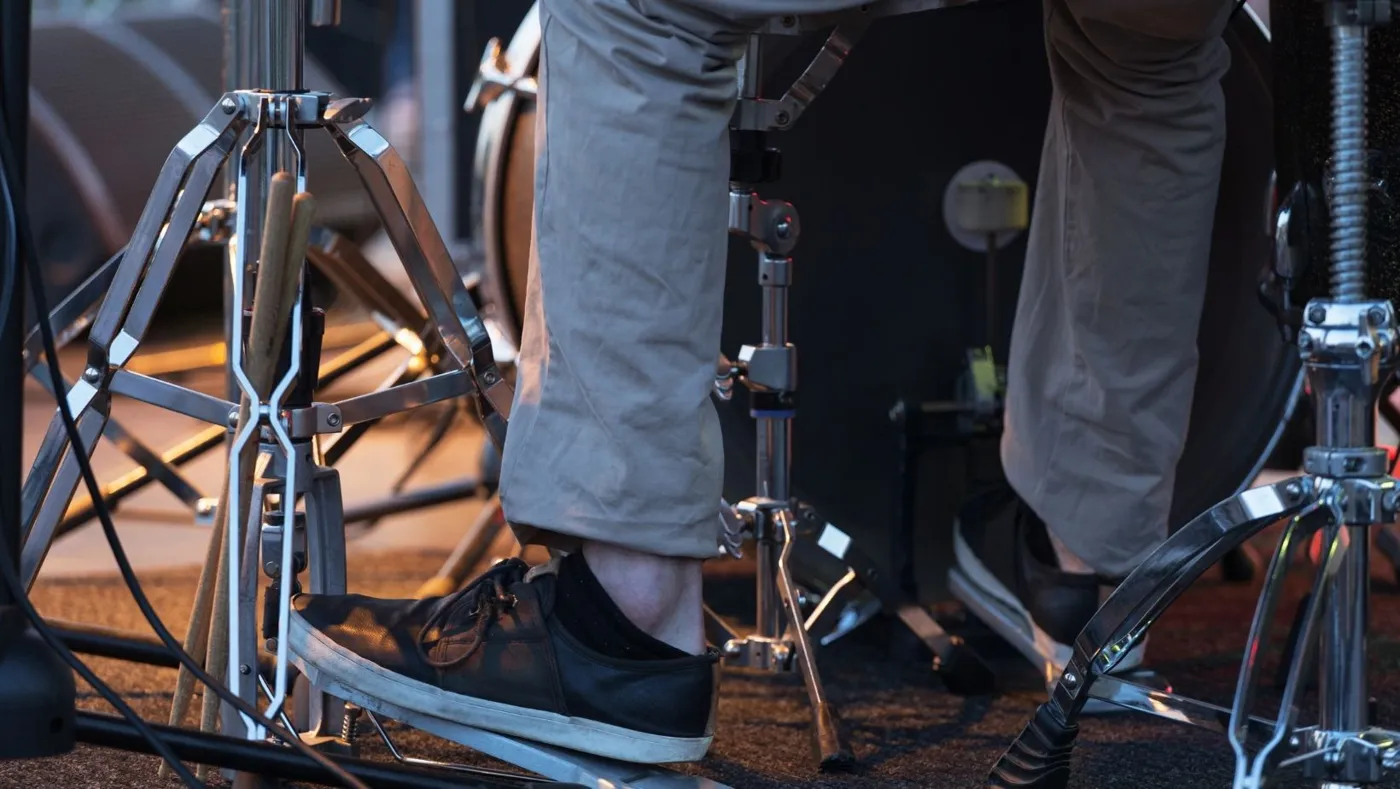
When it comes to bass drum technique, the two most important things to pay attention to are the height of your throne and your distance from the bass drum.
This is also partly a matter of habit and opinion, but the golden rule is to sit high enough that your hips are higher than your knees, and far enough from the bass drum that your ankle is in front of your knee. This gives you an effortless, efficient and balanced playing position.
Heel down or heel up?
Leaving aside the techniques of more advanced players, a beginner has two ways of playing to choose from. Heel down, or heel up.
Watch the video below for examples of both, plus important and useful things to pay attention to when you play.
Heel down. 0:14->
Heel up. 2:20->
Notes on technique
You can "bury" the beater in the bass drum head if you want. This mainly affects the sound.
At the start, always try to bring the beater off the head, so you learn to relax your foot between strokes.
When your playing position is relaxed, you can play longer without getting tired.
Checklist and example pedals for beginners
- Practice both the heel down and heel up techniques at a slow tempo
- Make sure your foot stays in contact with the pedal the whole time
- Relax your ankle and foot between strokes
Double pedals
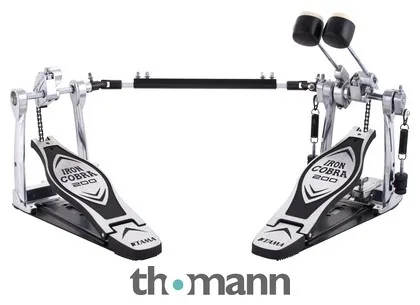
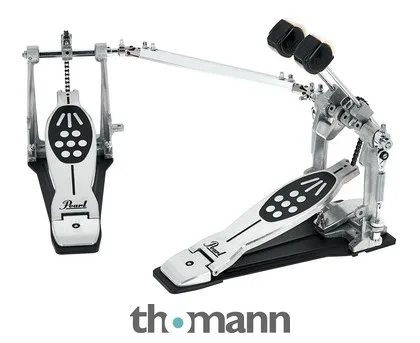
When you play a double pedal (or a double bass drum kit), you have to pay attention to your balance. Besides height and distance, this is also affected by where you sit on the throne. Keep your back straight and sit fairly close to the middle of the throne. If you sit too far forward, it's easy to lean too much on the pedals, and then your balance starts to wobble when you need to play with both feet in turn.
Avoid frustration with double pedals by watching the video below.
Example pedals
Exercises
Finally, here are a couple of videos you can use to practice your own technique.
Practicing bass drum technique takes time. Especially at the start it can feel like control is totally impossible to reach and your foot gets tired right after a short practice. Take it one step at a time, watch the videos and practice the right technique patiently.
Pro tip: Paulo Poverini from JAMK University of Applied Sciences in Jyväskylä has written a really thorough thesis on the topic (in Finnish). You can read it here.
Also check out more on bass drum pedal settings and more advanced pedal techniques below.