 Tasodrums

What's good to know about drumsticks
Sticks are a drummer's most important tool, and they're also the first thing you buy when you start playing drums. There are dozens of different sticks, but a few basics will get you off to a good start.
In this post we'll go through:
- Stick sizes: what 7A, 5A, 5B and 2B mean
- Material and tip
- How to spot a good pair of sticks
- Sticks for kids
1. Stick sizes
A stick's size is marked with a combination of a number and a letter, for example 5A. The number tells you how thick the stick is: the smaller the number, the thicker the stick. So 2B is thicker than 5B, and 7A is the thinnest of these.
The letter originally told you what the stick was meant for. A was for orchestra use, B for bands and S for marching drums. These days the letters are more of a rough guide, and sizes vary a bit between brands.
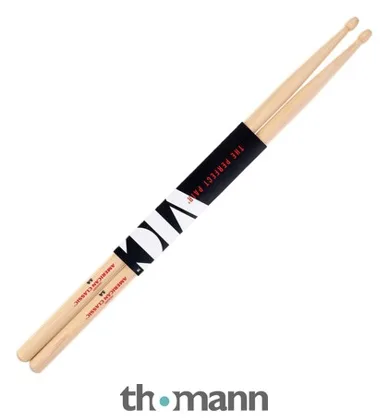
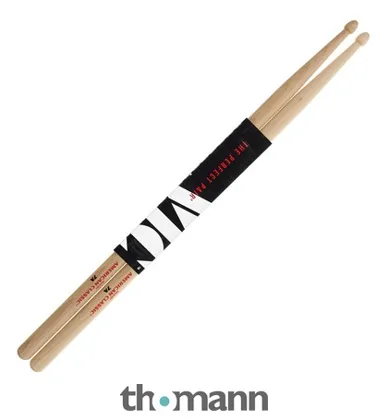
- 7A – the thinnest and lightest, good for quiet playing, jazz and kids
- 5A – the most common size, you can't go wrong with this one
- 5B – a bit thicker and heavier than 5A
- 2B – thick and heavy, for loud playing and powerful strokes
For example, Vic Firth's 7A is about 13.7 mm thick, 5A about 14.4 mm, 5B about 15.1 mm and 2B about 16 mm. The differences sound small, but you can clearly feel them in your hand.
Tip: If you don't know where to start, buy 5A. It's the best-selling stick size in the world and works for almost any kind of playing.
2. Material and tip
Wood
Most sticks are made of wood. The most common types of wood are:
- Hickory – the most common, durable and absorbs the vibration from strokes well
- Maple – lighter, feels fast in your hand
- Oak – the heaviest and densest, handles even hard playing
To start with, hickory is a safe choice. You can try other woods later, once you know better what you want.
The tip, or the end of the stick
The tip at the end of the stick especially affects how your cymbals sound. There are two kinds of tips:
- Wood tip – a warmer and softer sound
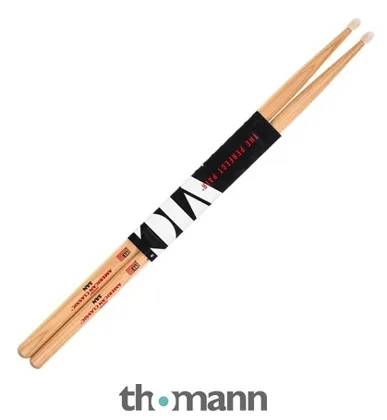
- Nylon tip – a brighter sound on cymbals, and the tip lasts longer
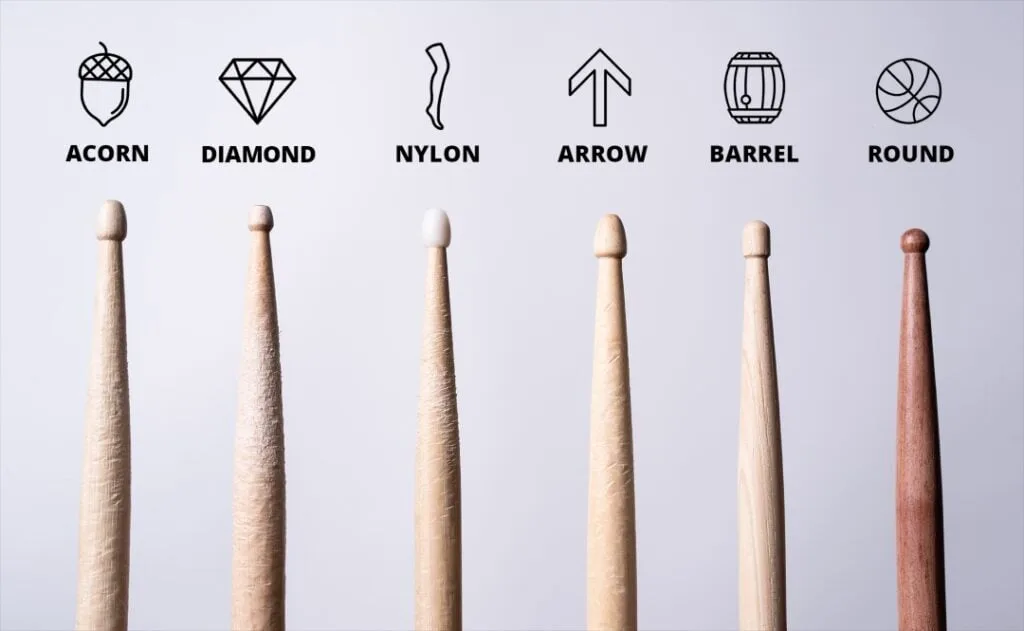
Tip shapes vary: acorn, diamond, arrow, barrel, round and so on. At the start the shape doesn't really matter, and you'll find your own favorite little by little. A nylon tip can be a good choice for electronic drums, because it doesn't break and leave bits of wood on the pads.
Image: www.drumeo.com
3. How to spot a good pair of sticks
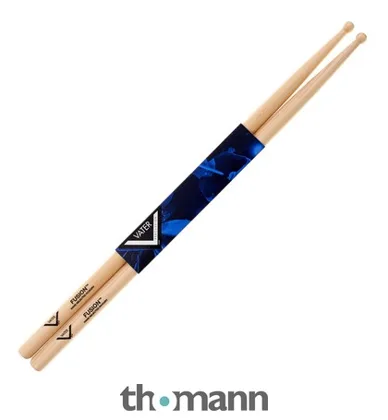
The most used stick brands are Vic Firth, Vater and Promark. More important than the brand is that the two sticks in a pair match each other.
- The sticks are straight. Roll the stick on a flat table. If it wobbles or rocks, the stick is warped.
- The sticks weigh the same. Hold one stick in each hand and compare the weight.
- The sticks sound the same. Tap the sticks on a table one at a time. In a good pair the sound is almost the same.
Sticks wear out and break with use, so it's a good idea to always keep a couple of pairs within reach. Replace a stick at the latest when splinters start coming off it or the tip has chipped. A broken stick can scratch your heads and cymbals.
4. Sticks for kids
7A works best for kids, because it's thinner and lighter. 7A is a good choice until about age 10. After that any stick size works, for example the standard 5A or 5B. Read more about a child's first drum kit in my post on drum kits for kids.
Recap
- The number tells you the thickness: smaller number = thicker stick
- 5A is the most common and safest choice
- Hickory is the most common wood, and a nylon tip lasts longer
- Check that the sticks in a pair are straight and weigh the same
Also check out what else you need to get started in my post on how to start playing drums.